kelp’s intern hid this reply
that’s all you need to know

Kelp DAO Restaked ETH (RSETH)
Kelp DAO Restaked ETH بيانات الأسعار المباشرة
Kelp DAO Restaked ETH RSETH سجل الأسعار USD
امتلك RSETH الآن
اشترِ وبع RSETH بسهولة وأمان على BitMart.Kelp DAO Restaked ETH رؤى X
A ton of this is just completely untrue.
1) Kelp originally used the defaults which were MultiDVN or DeadDVN and manually migrated to a 1/1 config later
2) Almost 100% of the volume on a 1/1 config was rsETH
3) Not using a 1/1 for production applications is mentioned many times in the documentation.
The defaults Kelp is referencing in their screenshot were multiDVN or DeadDVN, which force-rejects an application using the defaults at all and requires them to manually set configuration.
rsETH was originally configured to use the default LayerZero configuration of a multiDVN setup of LayerZero Labs + Google:
Here are the exact transactions where that happens
Ethereum → Arbitrum:
https://t.co/C2uCxmpBCX
at 2024-02-06 03:09:47 UTC
Ethereum → Optimism:
https://t.co/vuQWxeyUUA
at 2024-02-06 03:09:59 UTC
KelpDAO then manually changed these to 1/1 configs:
For the original Feb 6 Ethereum routes to Arbitrum/Optimism, KelpDAO’s Ethereum contract switched from defaults to manual OApp-scoped config on 2024-04-0
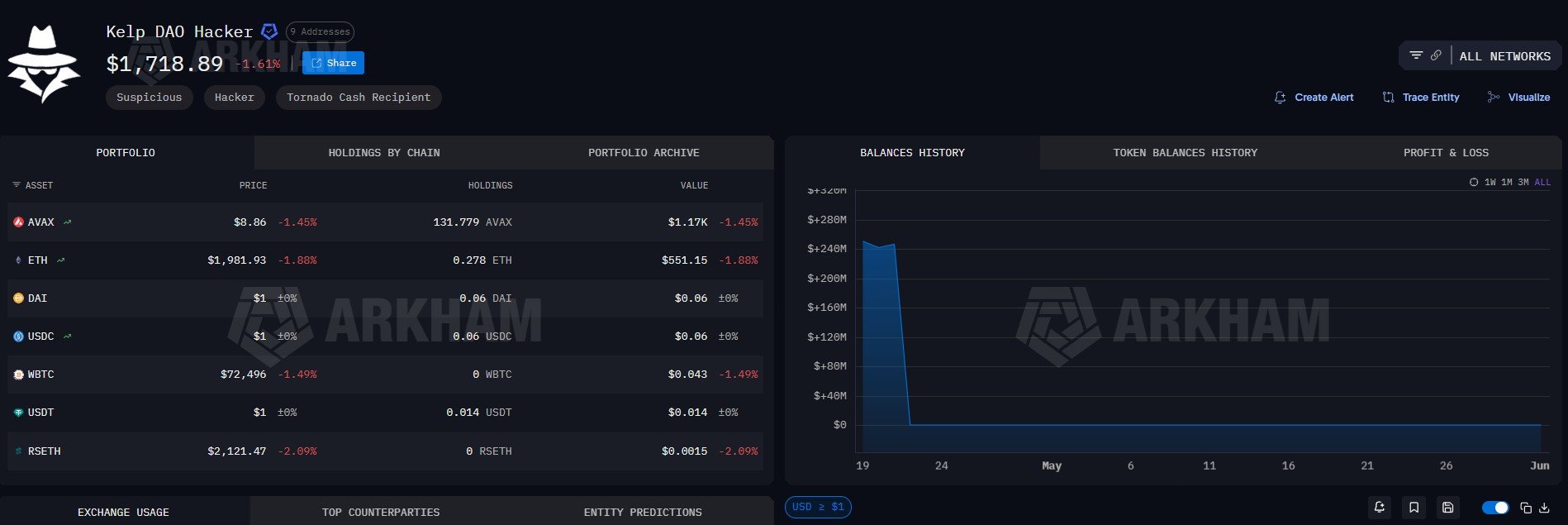
Many things can be true regarding the Kelp & LayerZero exploit.
1. The LZ DVN got compromised.
2. LZ's default configuration is multi DVN, not a 1/1.
3. rsETH originally used LZ’s default multiDVN config (LayerZero Labs + Google)
4. Kelp manually changed its config from default to 1/1.
5. Kelp later deployed all configs as 1/1 setups.
6. Many LZ users still run 1/1 configs, but LZ discourages it for production code.
7. The 2/2 DVN setup of LZ + Nethermind processed the most volume among LZ security configs. 16/17 Nethermind admins are also admins on the LZ Labs DVN (94% overlap).
8. LZ comms should've been better after the incident.
9. There are still important questions that need answers from @LayerZero_Core, like those highlighted by @ChainLinkGod under Bryan's reply.
I believe that Kelp transitioning rsETH from LayerZero's OFT standard to @Chainlink's CCT standard is the safest and most logical alternative here.
But, for the sake of objectiveness, I'd also recommend reading @PrimordialAA's post underneath.
https://t.co/xwJeKdNPBL
Full asset-by-asset overview of the Aave book and e-mode loans:
https://t.co/I6DNiD6cDU
Includes depeg stress scenarios, individual use as collateral statistics, and more 👇 https://t.co/2lxm19cMZe