Купити криптовалюту
Картка
P2P-торгівля
Купуйте USDT через маркетплейс
Кредитна/дебетова картка
Купуйте криптовалюту за допомогою Visa або MasterCard
Платіж третьої сторони
Купуйте криптовалюту через MoonPay, Simplex та інші сервіси
Картка BitMart
Розширення можливостей вашого криптожиття
Передплачена криптовалютна картка
Миттєво отримайте картку Mastercard для витрат
Торгувати
USDⓈ-M
Використання USDⓈ в якості застави
COIN-M
Використання самої COIN в якості застави
TradFi
Єдине місце для торгівлі металами, акціями та іноземною валютою
Демоторгівля
Дізнайтеся, як торгувати без ризику
Огляд ф'ючерсів
Універсальна платформа для всього, що стосується ф'ючерсів
Futures King
Призовий фонд 478 000 USDT
Примножити
Детальніше про Earn
Заробляйте на невикористаних активах із легкістю
Заощадження
Заробляйте на холдингу.
Стейкінг
Легка ставка, висока винагорода.
Управління капіталом
Примножуйте свій капітал із допомогою провідної команди в галузі управління активами
RWA
Утримуйте BMRUSD — отримуйте дохід
VIP-ексклюзив
Стабільно заробляйте для VIP-користувачів
AI Hub
Rewards
Щоденний розіграш ф’ючерсів
100% шанс на перемогу на щоденних угодах
Щоденний спотовий розіграш
Виграйте головний приз — до 8 888 USDT
Ставка для голосування
Заробіть айрдропи, проголосувавши
Установа
Професійні та ексклюзивні послуги
VIP
Розблокуйте ексклюзивні винагороди
Академія
Швидко дізнайтеся про трейдинг та блокчейн
BitMart Internship
Start your Crypto Career Here
Bitmart подорожі
Універсальні глобальні туристичні послуги
Поповнення мобільного
Швидке і безпечне поповнення мобільного онлайн
Send
Send money globally, fast and secure
BitMart Mall
Заробляйте криптовалюту

JLaunchpad (JLP)
$ 0.00027 (JLP/USD)
0%
24H
JLaunchpad JLP Історія зміни цін USD
Відстежуйте зміну ціни JLaunchpad за сьогодні та за 7, 30 і 90 днів
Період
Змінити
Зміна (%)
Сьогодні
--
--
7днів
--
--
30днів
--
--
90днів
$ 0.000019
-6.67%
Стати власником JLP зараз
Купуйте та продавайте JLP легко та безпечно на BitMart.
JLaunchpad Інформація про ринок
$ 0.00024 24-годинний діапазон $ 0.0079
Найвищий показник за весь час
$ 0.0079
Найнижчий показник за весь час
$ 0.00024
24-годинна зміна
24г Vol
0
Циркуляційний запас
0.00
JLP
Ринкова капіталізація
0
Максимальна пропозиція
1.00B
JLP
Повністю розбавлена ринкова капіталізація
0
Торгувати JLP
Заробити
Залучайте неактивну криптовалюту до роботи та легко отримуйте пасивний дохід через заощадження, стейкінг та інші послуги.
JLaunchpad X Інсайт

Jupiter
DeFi_Expert
Educator
C
 618.4K @JupiterExchange
 Бичачий
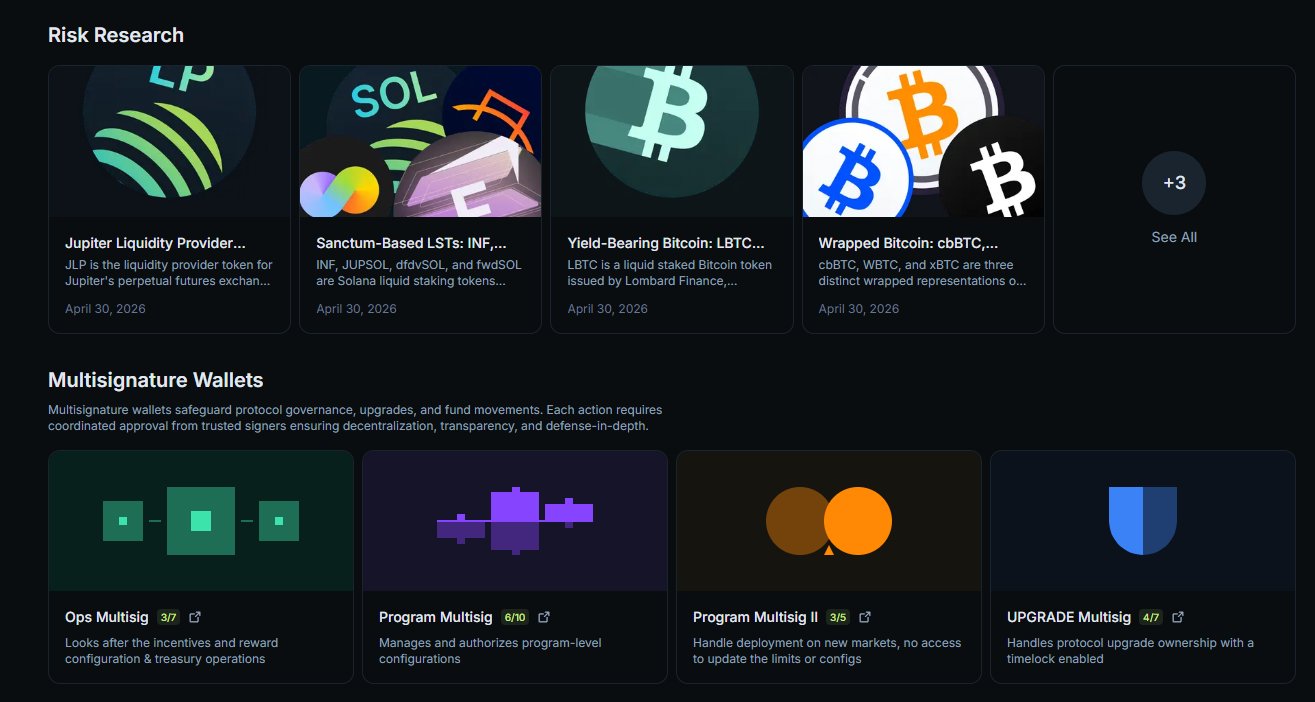
Jupiter Lend emphasizes DeFi transparency, publishing audits, risk research, and multi-sig wallet details.

Jupiter Earn D
11.1K @jupiter_earn Transparency really matters in DeFi.
That’s why Jupiter Lend actively maintains our Transparency Page with:
• Every audit and formal verification
• Published risk research
• Oracle integrations
• Links to our multi-sigs
See it all for yourself: https://t.co/oFiVKLErOz https://t.co/FAzDtZ0aR3
 64
64
 2
2
 5.7K
5.7K
2026-06-23 03:27
Тенденція JLP після випуску
Бичачий
Jupiter Lend emphasizes DeFi transparency, publishing audits, risk research, and multi-sig wallet details.
Jupiter
DeFi_Expert
Educator
C
618.4K @JupiterExchange Надзвичайно бичачий
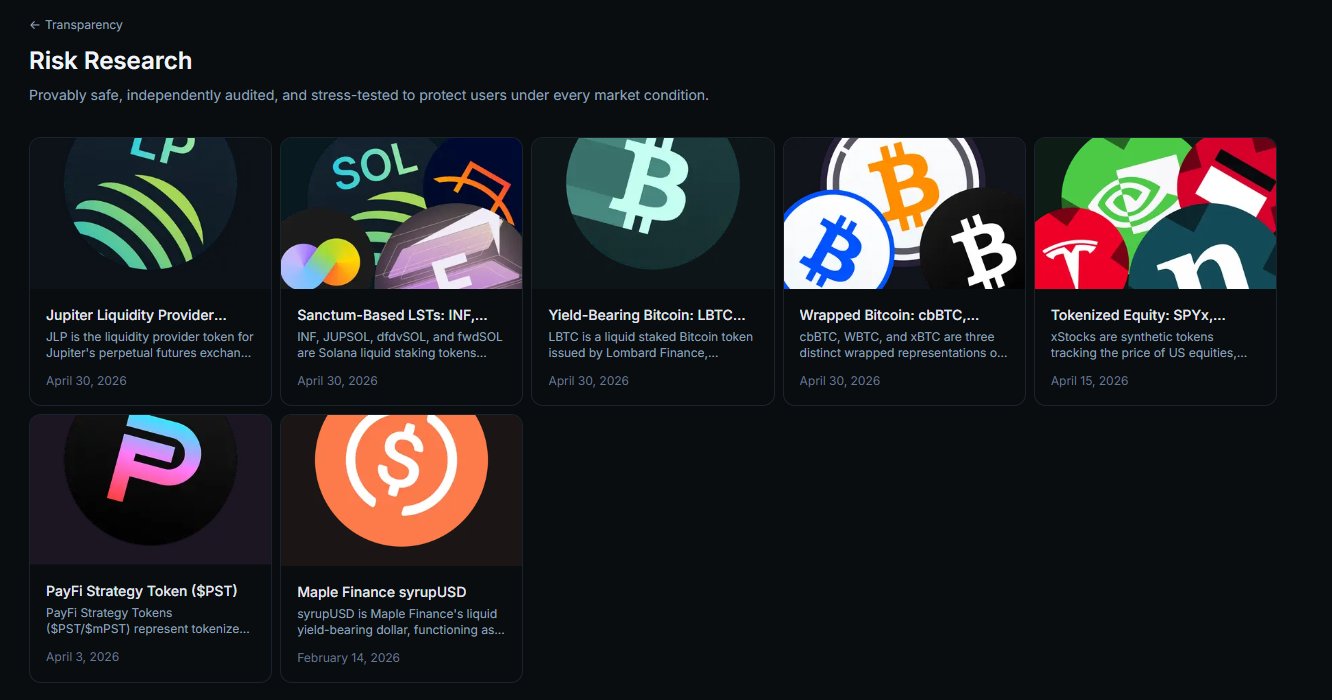
Jupiter Lend launches risk research, ensuring collateral safety and reliability.
Jupiter Earn D
11.1K @jupiter_earn Our risk research is now live on Jupiter Lend.
Browse the diligence behind every collateral listing
With each assessment breaking down the rationale for approval.
View the full reports here: https://t.co/SWqLfqTO2t https://t.co/3gGIo07IKk
 163
23
17.1K
163
23
17.1K
2026-05-30 20:46
Тенденція JLP після випуску
Надзвичайно бичачий
Jupiter Lend launches risk research, ensuring collateral safety and reliability.

DeFi Dad ⟠ defidad.eth
Educator
DeFi_Expert
C
181.2K @DeFi_Dad Надзвичайно бичачий
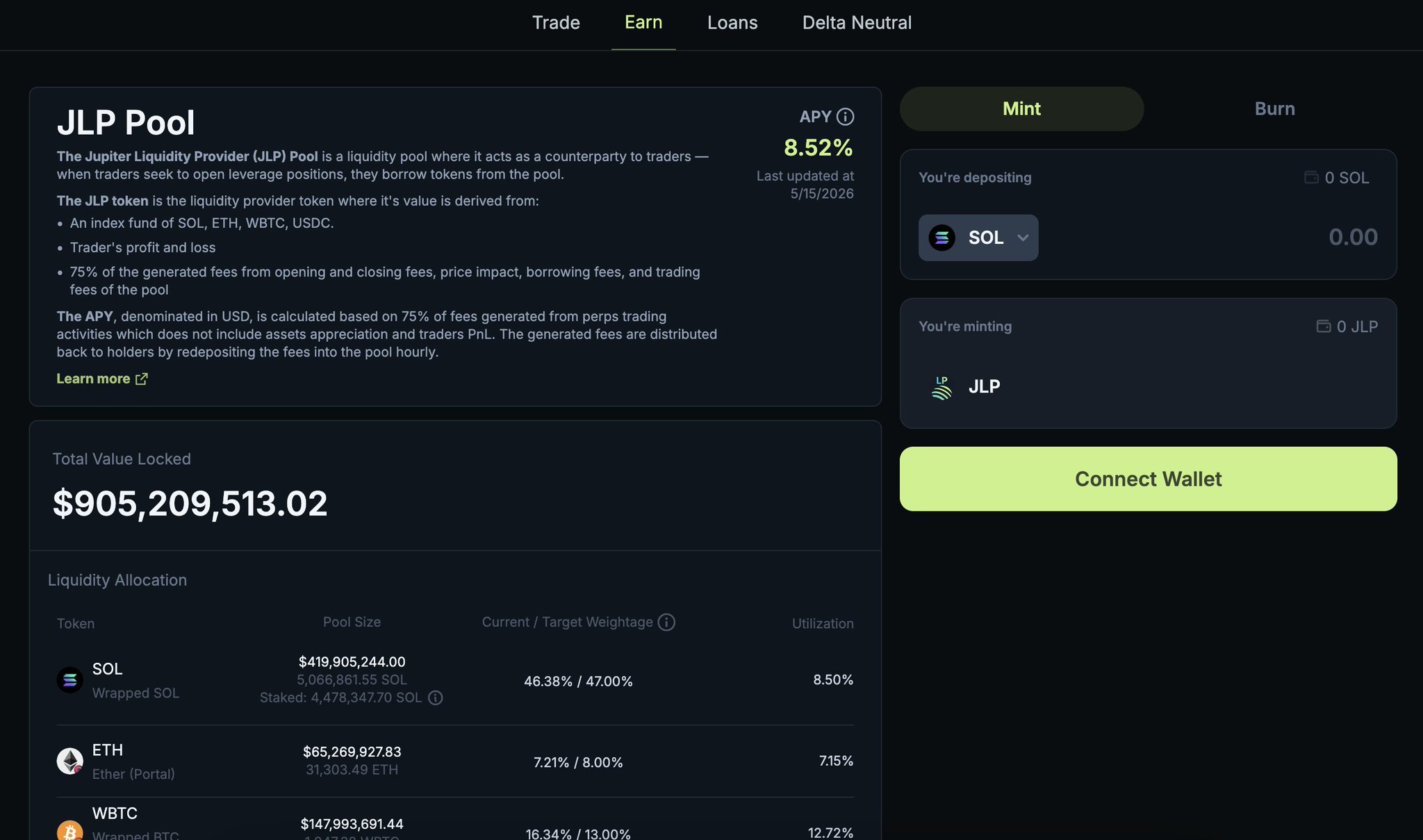
JLP offers an 8.52% APY as a SOL/ETH/BTC/USDC index, providing risk hedging and yield generation.
I get most excited in these market conditions, whenever I find or rediscover simple ways to earn predictable yields.
JLP by @JupiterExchange is one tool I think about often.
JLP acts as a counterparty to Jupiter traders PnL. Plus, when traders open leverage positions, they borrow tokens from the pool, earning JLP holders more fees.
JLP is 30% stablecoins + 70% (SOL/ETH/BTC).
Meaning, JLP is an index of USDC, SOL, BTC, and ETH so it's not like a stablecoin savings product, more like a less volatile index of these 3 tokens, given 30-32% is stablecoins.
If we look at token performance year-to-date:
BTC = -12%
ETH = -28%
SOL = -32%
JLP = -14.5% 👌
JLP would have been a helluva a buy to protect your holdings start of 2026, and it remains an interesting product even for bull markets, except for you do give up some upside not being more purely exposed to those underlying tokens, assuming they'd be up a lot.
With JLP, we can currently earn 8.52% APY from opening and closing fees, price impact, borrowing fees, and trading fees of the pool. Generated fees are distributed back to JLP holder by redepositing the fees into the pool hourly.
JLP can also be used as collateral with JLP Loans to borrow at 90% LTV, with 95% LLTV on Jupiter, borrowing USDC at 5.99%, with $84M in USDC liq available.
JLP Loans: https://t.co/wQZZurUJQJ
For investors like myself, who are seeking to accumulate these blue chip majors, and get long while markets are down, but also protect against downside while earning fees in the Jupiter trading product suite (perps), JLP feels so damn obvious.
I am overdue to better incorporate JLP into my portfolio.
Learn more about JLP here: https://t.co/lRenvvKmKD
DeFi Dad ⟠ defidad.eth
Educator
DeFi_Expert
C
181.2K @DeFi_Dad Shoutout to @kashdhanda from @JupiterExchange for recording a new Revenue Meta episode on The @Edge_Pod (due out next week) and reminding me of these thoughts on JLP 🫡 https://t.co/TQoZ5EXCqq
 19
11
1.9K
19
11
1.9K
2026-05-19 19:31
Тенденція JLP після випуску
Надзвичайно бичачий
JLP offers an 8.52% APY as a SOL/ETH/BTC/USDC index, providing risk hedging and yield generation.
Прогноз ціни
Чи зараз слушний час для покупки JLP? Чи варто зараз купувати або продавати JLP?
Вирішуючи, чи вдалий зараз час для купівлі або продажу JLaunchpad (JLP), важливо спочатку узгодити свою торгову стратегію та профіль ризику.Довгострокові інвестори та короткострокові трейдери часто по-різному інтерпретують ринкові умови, тому ваше рішення має відображати ваш особистий підхід. Згідно з останнім 1-денним технічним аналізом JLP, поточний сигнал — Утримувати.

Прогноз Beacon
Ймовірний прогноз ціни (на найближчі 24 години)Відмова від відповідальності щодо передбачення Beacon
Результати даних, відображені на цій сторінці, аналізуються на основі фактичних торгових даних (OHLCV) обраної торгової пари разом із відповідними технічними показниками.
Цей прогноз є експериментальним технічним продуктом і надається лише для довідки. Він не є інвестиційною порадою. Несподівані події в реальному світі можуть суттєво вплинути на поведінку ринку. Трейдерам слід приймати рішення з обережністю.
Цей прогноз є експериментальним технічним продуктом і надається лише для довідки. Він не є інвестиційною порадою. Несподівані події в реальному світі можуть суттєво вплинути на поведінку ринку. Трейдерам слід приймати рішення з обережністю.
Про JLaunchpad
JLaunchpad (JLP) is a cryptocurrency launched in 2021and operates on the BNB Smart Chain (BEP20) platform. JLaunchpad has a current supply of 1,000,000,000 with 0 in circulation. The last known price of JLaunchpad is 0.0002847 USD and is up 0.00 over the last 24 hours. More information can be found at https://www.jlaunchpad.com.
Читати більше
Офіційні посилання
Дослідник ланцюга