
Tomorrow at 12 pm ET, the team from @AlliumLabs joins us for a live demo of their Stellar dashboard.
If you're shipping on Stellar, or want a front‑row look at adoption in action, join us here live. https://t.co/rqA1kUXGvs



 848.1K @StellarOrg
 Tomorrow at 12 pm ET, the team from @AlliumLabs joins us for a live demo of their Stellar dashboard.
If you're shipping on Stellar, or want a front‑row look at adoption in action, join us here live. https://t.co/rqA1kUXGvs
 100
100
 5
5
 9.6K
9.6K
 31.5K @lobstr
 Same five tokens as last week, different order:
XLM @StellarOrg
AQUA @AquariusDeFi
SHX @strongholdpay
yXLM
XRP
$XLM hasn't left the top spot yet. Which pair is yours? https://t.co/pFj1325DGA
 37
3
2.3K
37
3
2.3K
 88.5K @CryptoTheBossX
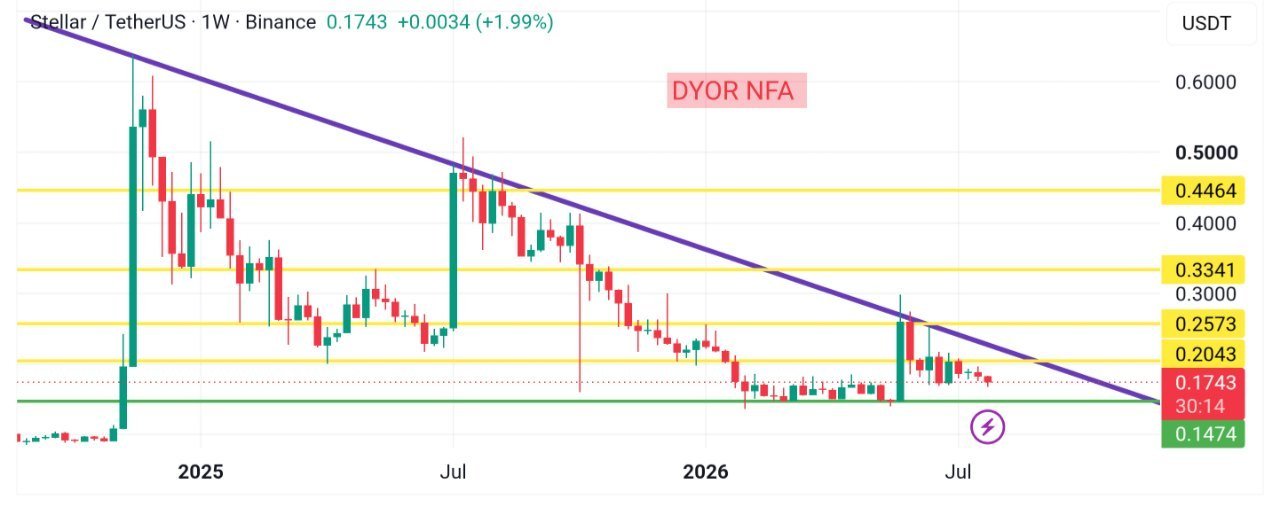
 🔍 Sometimes the strongest signal isn't a breakout it's what refuses to break.
Compared to the previous Stellar analysis, the picture has shifted. Instead of chasing momentum, $XLM is compressing between the long-term descending trendline and the green support, forming a clear squeeze. This kind of structure rarely lasts forever.
A weekly close above the purple trendline would confirm that sellers are finally losing control. Until then, patience matters more than prediction, as the current structure is building toward a decisive move rather than offering confirmation today.
‼️ Since Stellar is the subject of this analysis, mentioning it is unavoidable. Therefore, this post should not be considered paid advertising, but rather unavoidable unpaid promotion.
⚠️ Not financial advice.
#XLM #Crypto #Bitcoin #Altcoins
 159
35
24.6K
159
35
24.6K
