Rewards
Futures Daily Draw
100% Chance To Win With Daily Trades
Spot Daily Draw
Win 8,888 USDT In Grand Prizes
Mobile Top-Up
Top up mobiles easily, online, secure
Send
Send money globally, fast and secure
BitMart Mall
Live on crypto

Houdini Swap (LOCK)
$ 0.00074 (LOCK/USD)
-52.83%
24H
Houdini Swap Live Price data
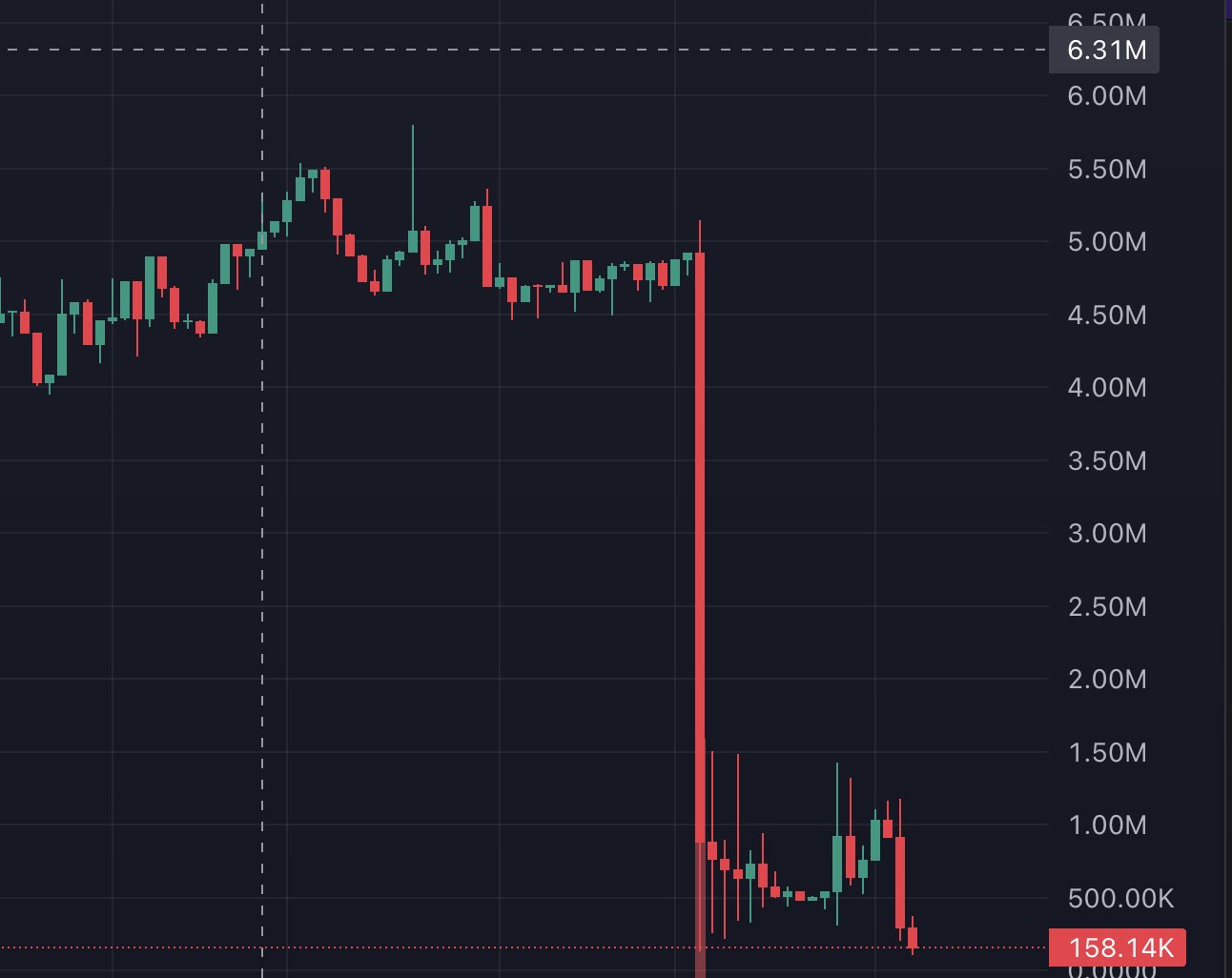
Today's price of Houdini Swap Is $ 0.00074 (LOCK/USD). With A Market Cap Of $ 68,067.29 USD. 24-Hour Trading Volume Of $ 831.14 USD, A 24-Hour Price Change Of -52.83%, And A Circulating Supply Of 90.79M LOCK.
Houdini Swap LOCK Price History USD
Track the price of Houdini Swap for today, 7 days, 30 days and 90 days
Period
Change
Change (%)
Today
$ 0.00083
-52.83%
7days
$ 0.00086
120.83%
30days
$ 0.0012
381.82%
90days
$ 0.00036
-18.88%
Own LOCK Now
Buy and sell LOCK easily and securely on BitMart.
Houdini Swap Market Information
$ 0.00062 24h Range $ 0.0015
All time high
$ 0.14
All time low
$ 0.00017
24h Change
-52.83%
24h Vol
$ 831.14
Circulating supply
90.79M
LOCK
Market cap
$ 68,067.29
Max supply
100.00M
LOCK
Fully diluted market cap
$ 74,972.22
Trade LOCK

Houdini Swap X Insight

Temmy | DeFi Analyst🦇🔊
FA_Analyst
DeFi_Expert
C
 40.4K @Only1temmy
 Bearish
Houdini Swap project acquisition left token LOCK holders without any earnings, and the token price plummeted 96%.
Temmy | DeFi Analyst🦇🔊
FA_Analyst
DeFi_Expert
C
40.4K @Only1temmy people aren't angry enough at the houdini swap situation and i genuinely don't understand why.
a project that generated $13M in revenue last year just got acquired for $18M and every single $LOCK holder got nothing from that exit. not a cent. think about how absurd that is, if you bought shares in a company that got acquired, you would receive your proportional value from that sale because that is how ownership works. but in crypto you can hold a token for years and when the team cashes out, you get absolutely nothing.
here's what they did before the announcement:
> buybacks were quietly turned off weeks before the deal closed
> the token was already bleeding while the acquisition was being negotiated behind closed doors
> the moment the announcement hit, the token dumped 96% in a month
this is not a one-off. a "decentralized" project runs buybacks to prop the price, stops them quietly, finds a buyer, cashes out, and retail is left holding a chart going to zero. different name, different ticker, same outco

 36
36
 10
10
 6.9K
6.9K
2026-05-06 08:17
Trend of LOCK after release
Extremely Bearish
Houdini Swap project acquisition left token LOCK holders without any earnings, and the token price plummeted 96%.

CBduck
Trader
Influencer
B
14.9K @CoinbaseDuck Extremely Bearish
LOCK token holders are abandoned, no buybacks after acquisition

AlvaroHK D
686 @0xAlvaroHK Another day, another M&A rug:
@HoudiniSwap just got acquired for ~$18M. Team + equity holders eat. $LOCK token holders? Nothing.
Buybacks turned off weeks ago.
Same story as Padre, Vertex, Axelar, etc...
Reminder: In most crypto projects, your token is NOT equity. It's utility at best, exit liquidity at worst. Team sells the company → you hold the bag.
DYOR on token rights before aping.
9
5
874
2026-05-05 10:46
Trend of LOCK after release
Bearish
LOCK token holders are abandoned, no buybacks after acquisition
Temmy | DeFi Analyst🦇🔊
FA_Analyst
DeFi_Expert
C
40.4K @Only1temmy Bearish
Houdini Swap project acquisition left token LOCK holders without any earnings, and the token price plummeted 96%.
people aren't angry enough at the houdini swap situation and i genuinely don't understand why.
a project that generated $13M in revenue last year just got acquired for $18M and every single $LOCK holder got nothing from that exit. not a cent. think about how absurd that is, if you bought shares in a company that got acquired, you would receive your proportional value from that sale because that is how ownership works. but in crypto you can hold a token for years and when the team cashes out, you get absolutely nothing.
here's what they did before the announcement:
> buybacks were quietly turned off weeks before the deal closed
> the token was already bleeding while the acquisition was being negotiated behind closed doors
> the moment the announcement hit, the token dumped 96% in a month
this is not a one-off. a "decentralized" project runs buybacks to prop the price, stops them quietly, finds a buyer, cashes out, and retail is left holding a chart going to zero. different name, different ticker, same outco
36
10
6.9K
2026-05-05 05:42
Trend of LOCK after release
Extremely Bearish
Houdini Swap project acquisition left token LOCK holders without any earnings, and the token price plummeted 96%.
Price Prediction
When is a good time to buy LOCK? Should I buy or sell LOCK now?
When deciding whether it’s a good time to buy or sell Houdini Swap (LOCK), it’s important to first align with your own trading strategy and risk profile.Long-term investors and short-term traders often interpret market conditions differently, so your decision should reflect your personal approach. According to the latest LOCK 4-hour technical analysis, the current trading signal is Buy. According to the latest LOCK 1-day technical analysis, the current signal is Sell.

Beacon Prediction
Probabilistic Price Forecast (Next 24 Hours)Beacon Prediction Disclaimer
The data results displayed on this page are analyzed based on actual trading data (OHLCV) of the selected trading pair along with corresponding technical indicators.
This prediction is an experimental technical product and is provided for reference purposes only. It does not constitute investment advice. Unexpected real-world events may significantly impact market behavior. Traders should make decisions with caution.
This prediction is an experimental technical product and is provided for reference purposes only. It does not constitute investment advice. Unexpected real-world events may significantly impact market behavior. Traders should make decisions with caution.
About Houdini Swap
Houdini Swap (LOCK) is a cryptocurrency launched in 2023and operates on the Ethereum platform. Houdini Swap has a current supply of 90,790,012.432358. The last known price of Houdini Swap is 0.00165592 USD and is down -9.17 over the last 24 hours. It is currently trading on 21 active market(s) with $0.00 traded over the last 24 hours. More information can be found at https://houdiniswap.com/.
Read More
Official Links
Chain Explorer