活動
合約每日抽獎
每日交易100%中獎
現貨每日抽獎
抽 8,888 USDT 豪禮
投票上幣
投票支持區塊鏈資產,賺取空投
機構
專為機構打造的解決方案
VIP
解鎖專屬福利
BitMart 學院
快速學習入門交易,瞭解區塊鏈知識
BitMart 大使
學習、建設 Web3,從 BitMart 起航
BitMart Travel
全球旅行服務,一站式預訂
BitMart話費充值
話費、流量、套餐便攜充值
轉帳
安全便捷,隨時隨地全球匯款
幣市商城
用加密貨幣滿足您的一切消費需求

Minima 實時價格數據
今日Minima的實時價格為$ 0.0051 (MINIMA/USD), 當前市值為 $ 2.86M USD。 24小時的成交量為 $ 16,807.58 USD。 過去24小時內漲跌幅為 +4.66%, 流通量為 553.37M MINIMA。
Minima MINIMA 價格歷史 USD
跟蹤 Minima 的今日價格、7天、30天和90天價格
週期
漲跌
漲跌幅 (%)
今日
$ 0.00022
4.66%
7日
--
--
30日
--
--
90日
--
--
立刻擁有MINIMA
在 BitMart 輕鬆、安全地買賣MINIMA
Minima 市場信息
$ 0.0048 24小時價格浮動區間 $ 0.0052
歷史最高
$ 0
歷史最低
$ 0
24小時漲跌幅
4.66%
24小時交易量
$ 16,807.58
流通供給
0.55B
MINIMA
市值
$ 2.86M
最大供給
1.00B
MINIMA
完全稀釋的市值
$ 5.17M
交易 MINIMA

Minima 社交媒體動態

Yeminiz 💙🫵
Educator
Trader
C
 58.1K @yeminiz
 極度看漲
Minima foresees that by 2030 blockchain will become an invisible infrastructure achieving massive application.

Lexkhalifa ❤️🔥 D
29.1K @_Lexkhalifa A normal day in 2030
It’s 7:30 AM in 2030.
Your EV charged overnight when electricity was cheapest.
Your energy meter verified exactly how much power was used and settled the payment automatically.
At 8:15, your car detects a faulty component.
Before you even know there’s a problem, it verifies the data, orders the replacement and schedules maintenance.
Your AI agent negotiates the service cost with another AI agent.
Machines are communicating.
Data is being verified.
Transactions are being settled.
And you haven’t opened a wallet, signed a transaction or even thought about blockchain once.
That might be what mass adoption actually looks like.
Not everyone buying tokens.
Not everyone learning seed phrases.
But blockchain becoming invisible infrastructure that devices, vehicles and AI agents use in the background.
This is the future Minima is building towards.
A blockchain designed to run at the edge, where humans and machines can participate directly in the network.
The biggest blockchain revolu
 57
57
 24
24
 2.0K
2.0K
2026-07-14 08:27
發佈後MINIMA走勢
極度看漲
Minima foresees that by 2030 blockchain will become an invisible infrastructure achieving massive application.

Perrie 🎱
Educator
Researcher
S
9.5K @PerrieDExplorer 極度看漲
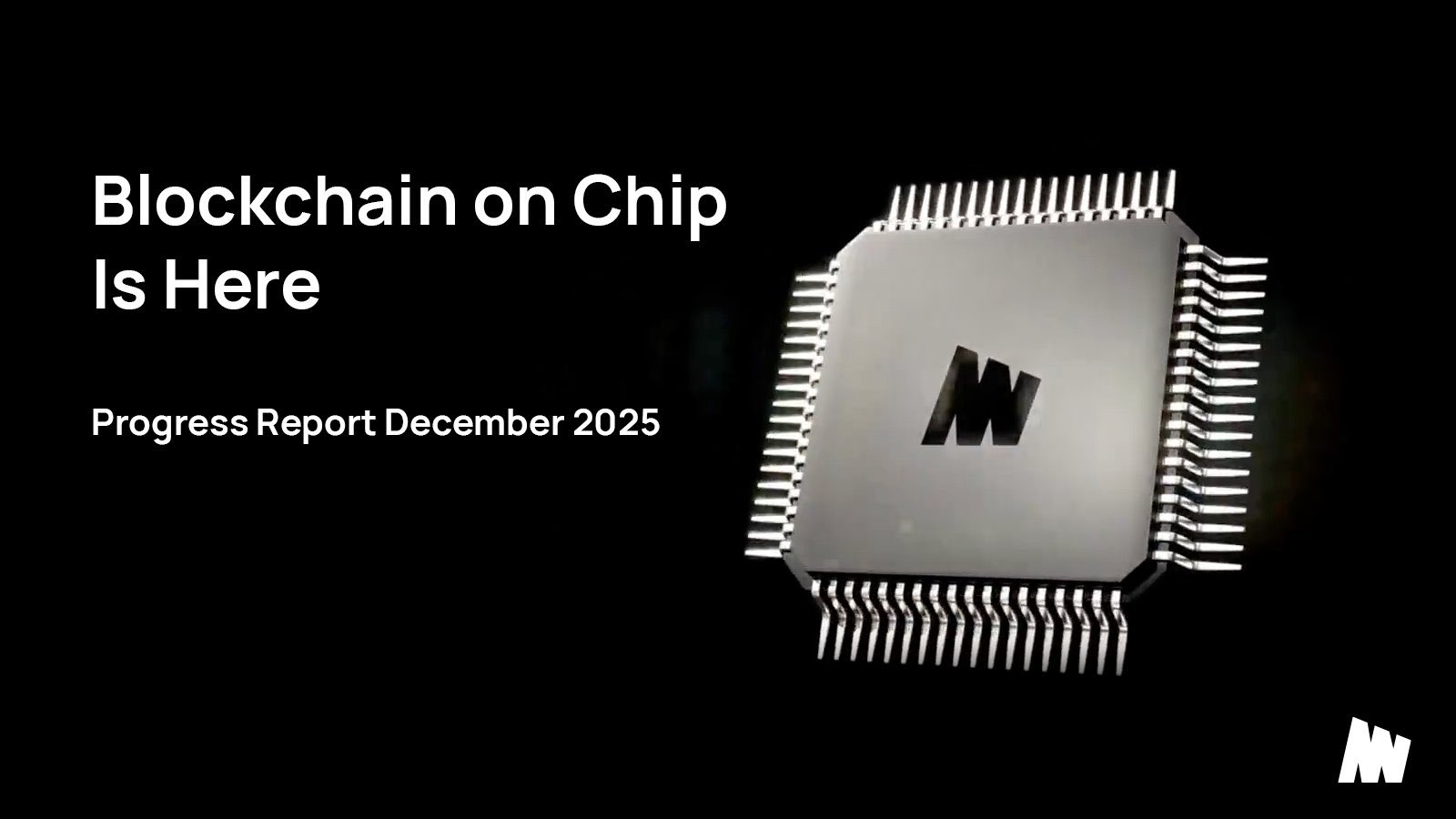
Minima successfully integrates blockchain directly into embedded hardware, achieving chip‑level decentralisation and empowering autonomous systems.
For a long time, blockchain has been described as something machines would eventually rely on.
In reality, it stayed far away from them.
Most systems still depend on cloud infrastructure and external services to handle trust, verification, and coordination.
That setup is fine until you start talking about autonomous machines.
When a system has to make decisions in real time, sending data elsewhere to be verified doesn’t make sense.
Latency matters. Reliability matters.
And relying on infrastructure the machine doesn’t control defeats the point of autonomy in the first place.
What @Minima_Global has done is remove that separation.
Instead of running blockchain somewhere else and letting machines connect to it, Minima runs directly inside embedded hardware.
The node isn’t external. It lives where the machine lives.
This wasn’t achieved by trimming down an existing blockchain.
It required building for embedded environments from the start.
Deterministic behaviour, predictable resource usage, and software that fits naturally into systems built around Arm processors and real-time control.
Minima is already running on embedded Arm platforms, integrated into autonomous hardware,
with cryptographic operations handled directly in silicon rather than left entirely to software.
That changes how trust works.
Validation no longer happens somewhere else.
It happens at the same point where data is generated and actions are taken.
Logs don’t get sent off to be recorded later. They’re created locally, in real time.
This is the difference between a machine that interacts with a blockchain and a machine that actually runs one.
For years, decentralisation has been discussed as a network problem.
What Minima shows is that it can also be a hardware decision.
Once blockchain lives inside machines, it stops being an add‑on. It becomes part of how autonomous systems are built.
That’s the foundation Minima has put in place.
 56
27
203
56
27
203
2026-01-05 05:37
發佈後MINIMA走勢
極度看漲
Minima successfully integrates blockchain directly into embedded hardware, achieving chip‑level decentralisation and empowering autonomous systems.

🌸Eri ~ Carpe Diem
FA_Analyst
Tokenomics_Expert
C
290.1K @sentosumosaba 極度看漲
Minima achieves L1 node operation on embedded hardware, realizing a chip blockchain.
Congratulations 👏
This is not a concept or a speculative roadmap. It is working now. https://t.co/mkODRNIxZi

Minima D
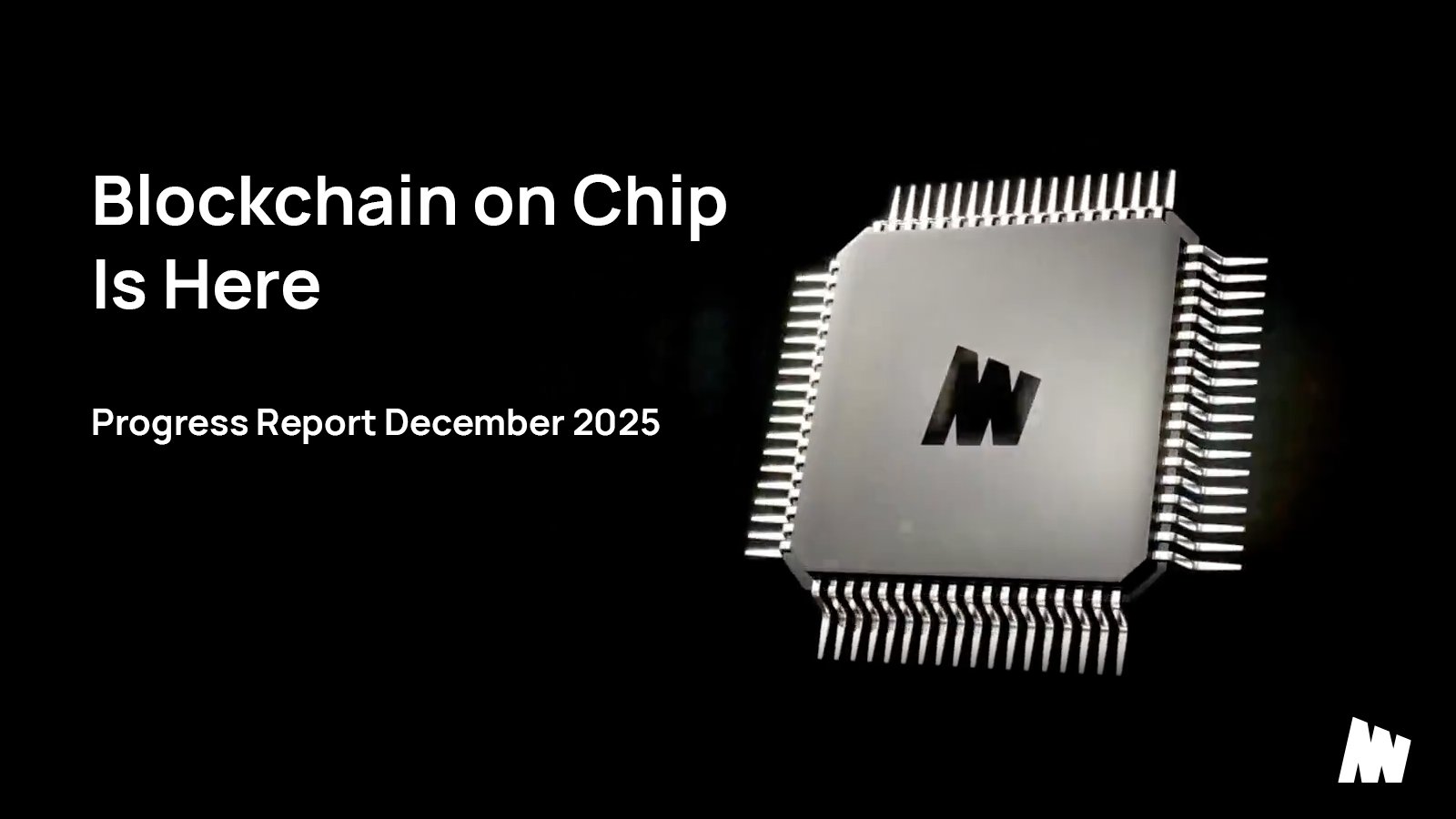
39.5K @Minima_Global Minima has reached a milestone the blockchain industry has discussed for more than a decade, but never truly delivered: a fully functioning Layer-1 blockchain node running directly on embedded hardware, without reliance on cloud infrastructure, heavyweight runtimes, or specialised servers.
Today, Minima runs on the Arm processor subsystem inside an FPGA board, with custom cryptographic accelerators. Minima’s deterministic architecture, combined with a purpose-built C++ code, positions Minima as the first blockchain genuinely engineered to live inside autonomous machines, not merely alongside them.
This is not a concept or a speculative roadmap. It is working now.
Read on for the overview, or over this link for the full update: https://t.co/ndEkj5wy0o
 45
6
7.9K
45
6
7.9K
2025-12-15 19:06
發佈後MINIMA走勢
極度看漲
Minima achieves L1 node operation on embedded hardware, realizing a chip blockchain.
價格預測
什麼時候是購買MINIMA的好時機?我應該現在買入還是賣出MINIMA?
在判斷現在是否是買入或賣出 Minima (MINIMA) 的合適時機時,首先需要結合自身的交易策略和風險承受能力。長期投資者與短期交易者對市場信號的解讀往往不同,因此建議根據個人交易計劃做出決策。 根據最新的 MINIMA 4 小時技術分析,當前交易信號為賣出。

Beacon預測
概率價格預測(未來24小時)Beacon預測免責聲明
當面頁面的數據結果基於當前交易對的實際交易數據(OCHLV)和相應的指標計算,然後進行分析得出結果。
此預測為實驗性技術產品,僅供參考,不構成投資建議。現實生活中的任何突發事件都可能對交易行為產生重大影響,因此交易者應謹慎決策。
此預測為實驗性技術產品,僅供參考,不構成投資建議。現實生活中的任何突發事件都可能對交易行為產生重大影響,因此交易者應謹慎決策。
關於 Minima
Minima (MINIMA) is a cryptocurrency launched in 2024. Minima has a current supply of 999,978,154 with 553,366,920 in circulation. The last known price of Minima is 0.00520452 USD and is up 1.89 over the last 24 hours. It is currently trading on 4 active market(s) with $16,400.35 traded over the last 24 hours. More information can be found at https://www.minima.global/.
查看更多
購買 MINIMA
交易 MINIMA