Palladium Labs just released the Canton Network Ecosystem Report H1 2026.
56 pages covering:
> Network health & tokenomics
> Protocol fee comparison vs other chains
> The full ecosystem: wallets, DEX, lending, stablecoins, payments
> Institutional deployments: who's in and their current status
> Grant programs & builder ecosystem
Here are the highlights :
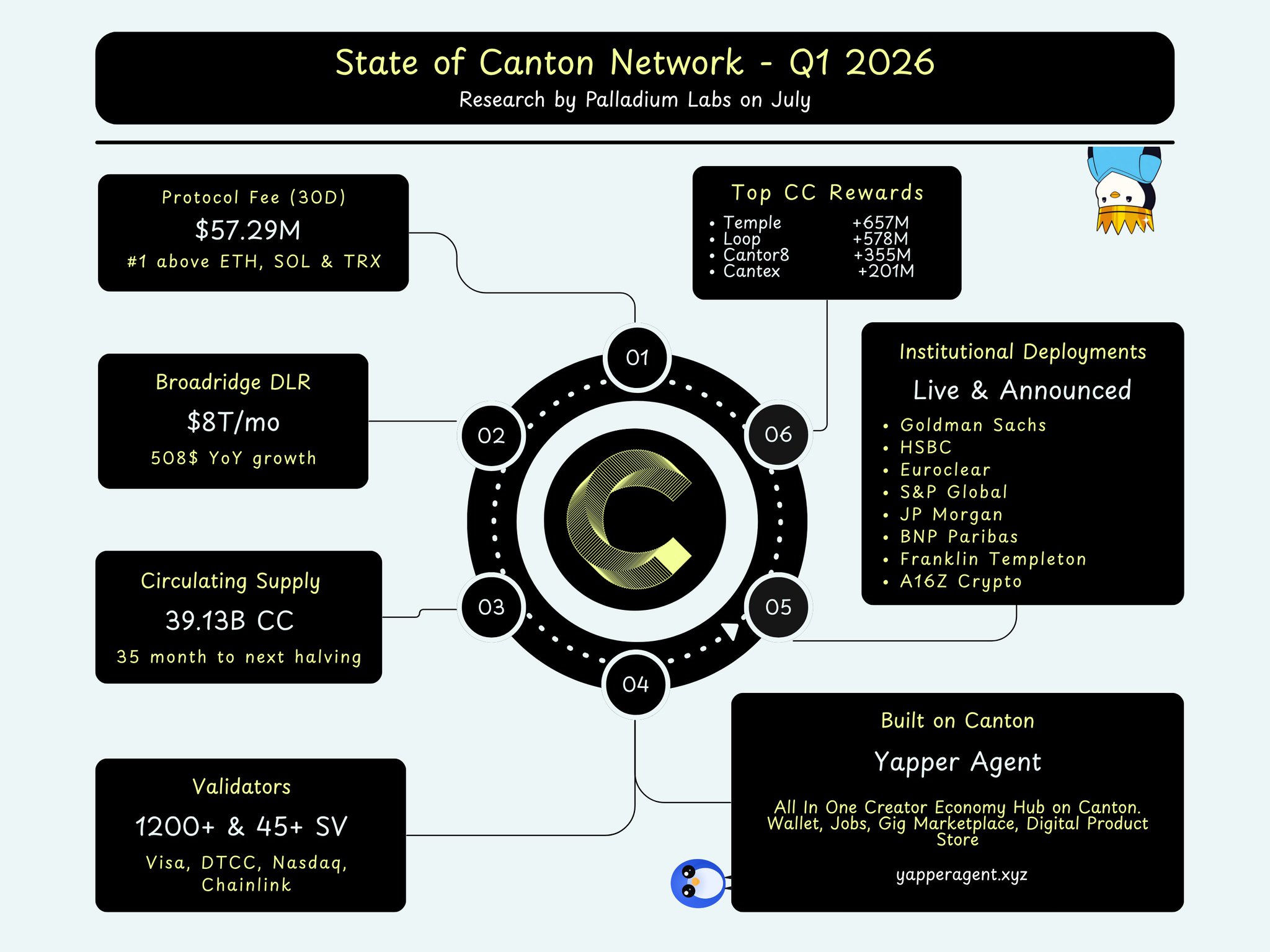
- Canton's protocol fee over the last 30 days: $57.29M. Beating tron:native solana:5t6wLCSzrdrmnnk5qSL2tQAtXXxFxFieK53uqBYwpump ethereum:native
This isn't speculative this is fee revenue from real activity on the network.
- Broadridge DLR is processing $8 trillion per month on Canton. 508% YoY growth.
- DTCC tokenized US Treasuries went live July 2026. Goldman Sachs, JPMorgan, HSBC, BNP Paribas, Visa, Nasdaq, Euroclear, Franklin Templeton all in.
a16z crypto just led a $355M funding round into Digital Asset in June.
> The ecosystem: 1,200+ validators, 45+ Super Validators including Visa, DTCC, Nasdaq, Chainlink, and Blockdaemon
────────────────────────────────
And in the middle of all those big names that's where I'm building @YapperAgent.
1.5 years ago, when InfoFi was at its peak, I built Yapper Indo a creator community with 15,000+ members and 2,000+ verified creators on X. That community showed me one thing: creators needed better infrastructure. Trust, payments, and real economic rails not just clout.
So I started building. Natively on Canton. While most people were still asking "what is Canton?"
we were writing DAML smart contracts, setting up validators, and shipping product.
Today, Yapper Agent is a Featured App on Canton Network. Same infrastructure as Goldman and JPMorgan. Built for creators, KOLs, and gig workers.
Not as a spectator. As a builder.
→ https://t.co/1GFwsxrZlb
→ https://t.co/1GFwsxrZlb