

List of crypto project shutdowns in 2026
a) CEX
• BitMEX
• BitMart
• AscendEx
b) DeFi
• Zapper
• Odos Protocol
• Radiant Protocol
• Satori Finance
• https://t.co/yaTGXgbai6
• Goldfinch
• Step Finance
• Dango Exchange
• Rage Trade
• MilkyWay
• Angle Protocol
• Ranger Finance
活動
合約每日抽獎
每日交易100%中獎
現貨每日抽獎
抽 8,888 USDT 豪禮
投票上幣
投票支持區塊鏈資產,賺取空投
機構
專為機構打造的解決方案
VIP
解鎖專屬福利
BitMart 學院
快速學習入門交易,瞭解區塊鏈知識
BitMart 大使
學習、建設 Web3,從 BitMart 起航
BitMart Travel
全球旅行服務,一站式預訂
BitMart話費充值
話費、流量、套餐便攜充值
轉帳
安全便捷,隨時隨地全球匯款
幣市商城
用加密貨幣滿足您的一切消費需求

BitMEX Token (BMEX)
$ 0.00018 (BMEX/USD)
0%
24H
BitMEX Token BMEX 價格歷史 USD
跟蹤 BitMEX Token 的今日價格、7天、30天和90天價格
週期
漲跌
漲跌幅 (%)
今日
--
--
7日
$ 0
0.00%
30日
$ 0.000029
18.75%
90日
$ 0.059
-99.68%
BitMEX Token 市場信息
$ 0.000099 24小時價格浮動區間 $ 1.30
歷史最高
$ 1.30
歷史最低
$ 0.000099
24小時漲跌幅
24小時交易量
0
流通供給
0.00
BMEX
市值
0
最大供給
450.00M
BMEX
完全稀釋的市值
0
交易 BMEX
BitMEX Token 社交媒體動態

Inspired Analyst
Media
Influencer
B
 36.5K @inspirdanalyst
 極度看跌
Multiple CEX and DeFi projects shut down in 2026, overall market outlook bleak
 24
24
 3
3
 2.9K
2.9K
2026-07-26 19:37
發佈後BMEX走勢
看跌
Multiple CEX and DeFi projects shut down in 2026, overall market outlook bleak

Catalina Castro
Media
Educator
C
302.5K @techconcatalina 看跌
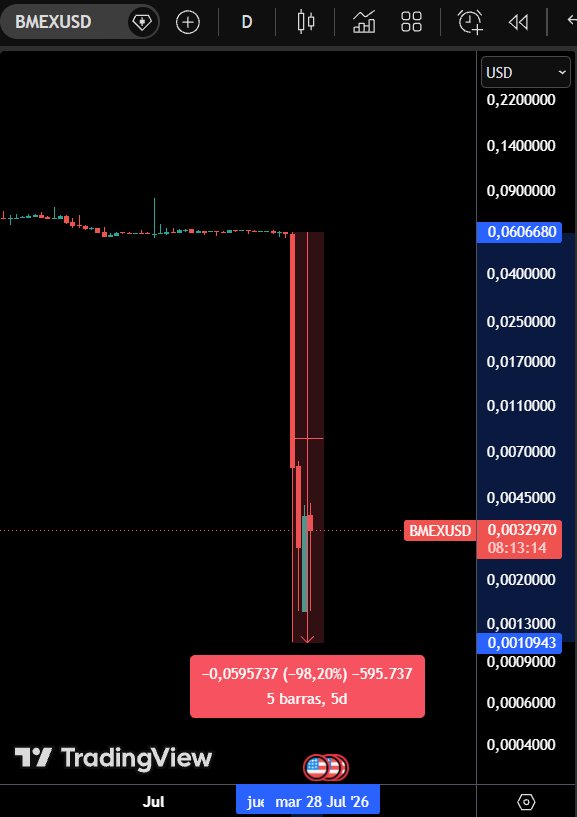
BitMEX's native token BMEX plummeted 98% due to the exchange's shutdown.
🚨LATEST🚨
🩸The native #cripto of BitMEX PLUNGES 98% after the exchange announced the CLOSURE of its operations. https://t.co/okfKvABtOb
 208
7
33.8K
208
7
33.8K
2026-07-26 15:57
發佈後BMEX走勢
極度看跌
BitMEX's native token BMEX plummeted 98% due to the exchange's shutdown.

Chain INK
OnChain_Analyst
Educator
S
8.1K @0xchainink 極度看跌
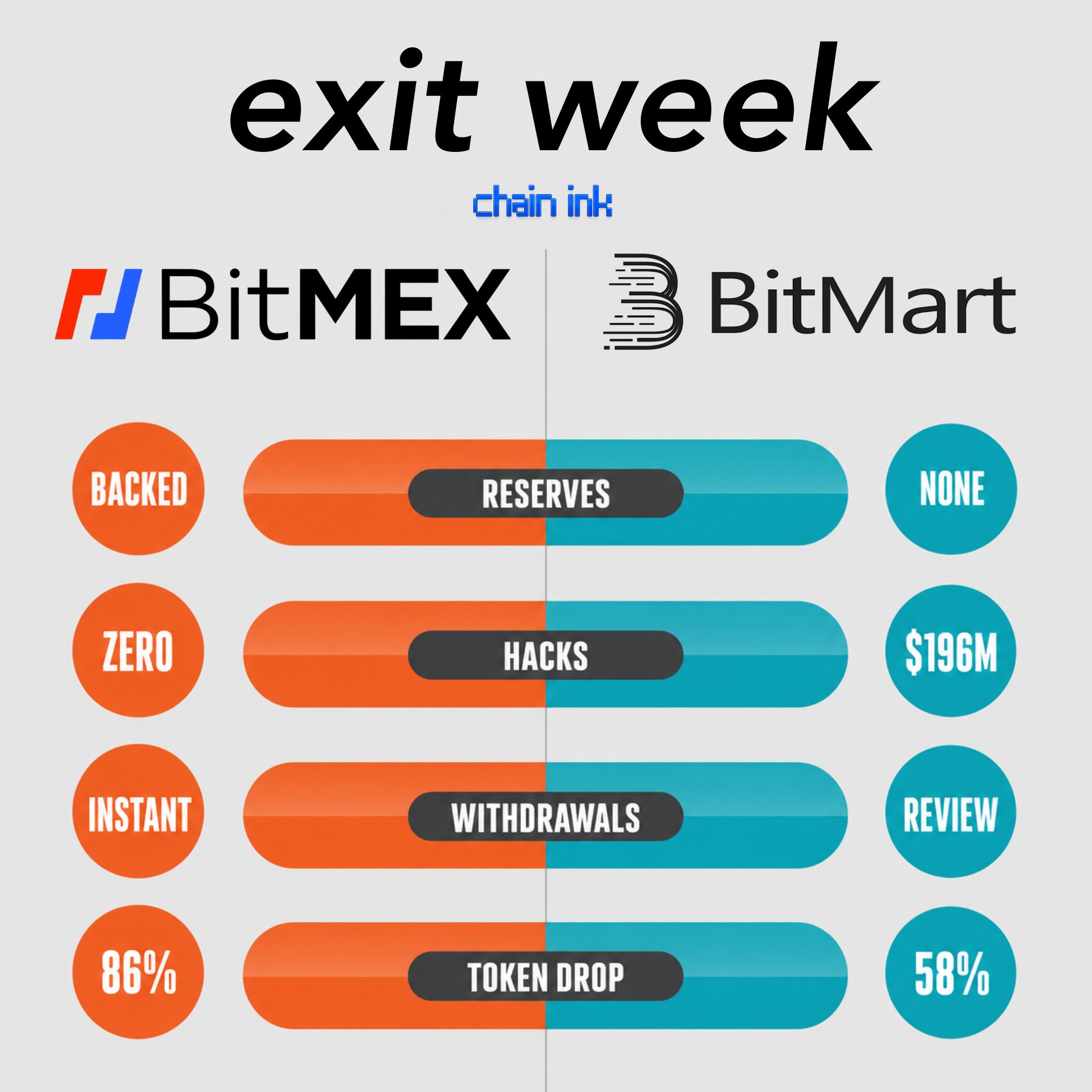
BitMEX vs BitMart exit comparison: BitMart chaotic due to hack and lack of reserves, both tokens plunge.
Two exchanges announced their exit this week.
Both opened with the same three words:
"strategic review"
🔴 The clean exit: BitMEX
→ Age : 11 years
→ Funds lost to hacks : $0
→ Proof of reserves : live
→ BMEX : down ~86%
🔵 The messy exit: BitMart
→ Age : 9 years
→ Funds lost to hacks : $196M
→ Proof of reserves : none
→ BMX : down ~58%
Same excuse. Opposite reality.
One closed the door. One left it jammed.
 100
17
5.6K
100
17
5.6K
2026-07-26 13:17
發佈後BMEX走勢
看跌
BitMEX vs BitMart exit comparison: BitMart chaotic due to hack and lack of reserves, both tokens plunge.
價格預測
什麼時候是購買BMEX的好時機?我應該現在買入還是賣出BMEX?
在判斷現在是否是買入或賣出 BitMEX Token (BMEX) 的合適時機時,首先需要結合自身的交易策略和風險承受能力。長期投資者與短期交易者對市場信號的解讀往往不同,因此建議根據個人交易計劃做出決策。 根據最新的 BMEX 4 小時技術分析,當前交易信號為持有。 根據最新的 BMEX 1 天技術分析,當前交易信號為持有。

Beacon預測
概率價格預測(未來24小時)Beacon預測免責聲明
當面頁面的數據結果基於當前交易對的實際交易數據(OCHLV)和相應的指標計算,然後進行分析得出結果。
此預測為實驗性技術產品,僅供參考,不構成投資建議。現實生活中的任何突發事件都可能對交易行為產生重大影響,因此交易者應謹慎決策。
此預測為實驗性技術產品,僅供參考,不構成投資建議。現實生活中的任何突發事件都可能對交易行為產生重大影響,因此交易者應謹慎決策。
關於 BitMEX Token
BitMEX Token (BMEX) is a cryptocurrency launched in 2022and operates on the Ethereum platform. BitMEX Token has a current supply of 99,237,548 with 0 in circulation. The last known price of BitMEX Token is 0.00018994 USD and is up 0.00 over the last 24 hours. More information can be found at https://www.bitmex.com/bmex.
查看更多