 IO.NET (IO)
- 57社交熱度指數(SSI)-24.73% (24h)
- #48市場預警排名(MPR)-35
- 224小時社交提及量-33.33% (24h)
- 100%24小時KOL看好比例2位活躍KOL
- 概要IO is approaching the 0.18 resistance level, recently burned 366k tokens and will increase tax for buyback, usage and AI demand are rising, but price fell 6% and social heat declined.
- 看漲訊號
- Approaching 0.18 resistance level
- Massive token burn
- Revenue-driven buyback
- AI inference demand rising
- New partners added
- 看跌訊號
- Price down 6.26%
- Social hype dropped 24.73%
- Market silence
- Lack of farming incentives
- Inflation still in doubt
社交熱度指數(SSI)
- 總體資料57SSI
- 社交熱度趨勢(7D)價格(7D)情緒分佈極度看漲 (50%)看漲 (50%)社交熱度洞察IO social hot index moderate (57.2/100, -24.73%). The main reasons are activity plummeting 36.36% and KOL attention dropping 35.29%, affected by a 6% price decline and market silence.
市場預警排名(MPR)
- 預警解讀IO warning rank fell to #48 (down 35), social anomaly score 73.72/100 decreased by 26.28%, sentiment polarization 56.25/100 fell by 11.68%, corresponding to a 6% price drop and social heat decline.
相關推文
 ShowMaker Influencer Community_Lead S31.68K @0xshowmaker
Hello friends A serious update has arrived to @ionet’s tokenomics. With the recent announcement, a significant portion of the network’s revenue will now be used for $IO burning and buybacks. This is a substantial development to prevent token inflation. As the usage of the @ionet network increases, more revenue will be generated and more $IO will be burned and bought back. Thus, the amount of $IO in circulation will continuously decrease. Even though the market is currently very sluggish and inactive, based on the instantaneous activity of the @ionet network, it is expected that over the next year more than 12 million $IO will exit circulation. In short, token inflation is decreasing together with real usage. Even if the market is frustrating, the @ionet team continues to cook up: - New partnership and collaboration announcements - Rapidly growing AI inference - Network revenues increasing with usage - Processing billions of token data daily on OpenRouter Every day, as demand for @ionet’s infrastructure grows, the importance of decentralized GPU networks also rises. @ionet aims to create a long‑term, sustainable incentive/revenue model for both users and token holders.
 io.net D439.13K @ionet
A new report from @CoinDesk just covered the Incentive Dynamic Engine. In depth research. Real stress tests. One conclusion. The IDE works. The report is live. https://t.co/x5d0bfbtuy https://t.co/ZsUGBQYQt5
 136 7 9.84K 閱讀原文 >釋出後IO走勢極度看漲io.net updates token economics, reducing IO circulation through burns and buybacks, receiving positive coverage from CoinDesk.
 Master of Crypto TA_Analyst OnChain_Analyst C162.95K @MasterCryptoHq
$IO is getting close to a key resistance level around $0.18–$0.19. If it breaks above this area, the next move could be higher. At the same time, 366,531 $IO was burned in just 2 days from IDE usage. No farming. No rewards. Just people using the product and tokens being removed from circulation. It's still early, but the burn system is working as expected. Now the focus is on whether usage keeps growing.
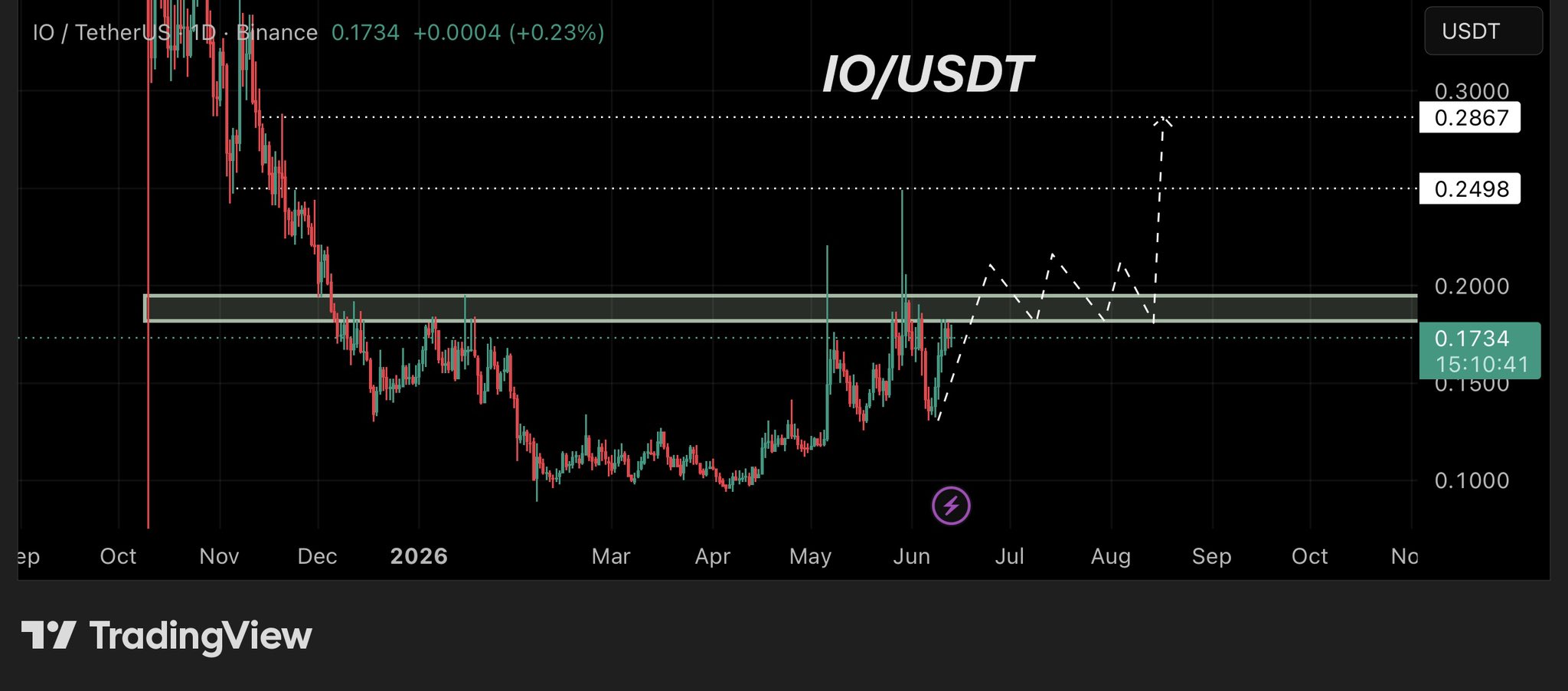 85 1 16.58K 閱讀原文 >釋出後IO走勢看漲The IO token is continuously burned through real usage, and its price is approaching a key resistance level; a breakthrough could lead to further gains.
 Loki FA_Analyst Educator S24.95K @kriptoloki
🔥 Tokenomics update has arrived for $IO. But this is not an ordinary “token burn” news. Because in the new system, burns are directly linked to the actual usage of the network. 👇 https://t.co/ANKA5kqB1z launched a new model called Incentive Dynamic Engine (IDE). The logic of the system is quite simple: 📌 Revenue is generated as the network is used 📌 A portion of the revenue goes to $IO buyback and burn 📌 More usage = more burn So instead of theoretical promises, a mechanism directly tied to network activity is being built. There is also an eye‑catching detail on the numbers side: 🔥 Based on current network activity, it is expected that over 12M+ $IO tokens will be removed from circulation within the next 12 months. Why now? Because growth continues on https://t.co/ANKA5kqB1z: 🟧 Institutional partnerships are increasing 🟧 AI inference demand is growing 🟧 Network revenues are rising 🟧 Billions of tokens are processed daily via OpenRouter Another change is on the provider side. With the new model, a USD‑based reward system for node operators is coming. This means: ✅ More predictable revenue ✅ More stable node network ✅ Lower volatility risk In my opinion, the most important part is: Today AI infrastructure is largely controlled by a few giant companies. https://t.co/ANKA5kqB1z aims to: 📌 Decentralized compute 📌 Open GPU access 📌 More competitive AI infrastructure In short; The new model on the $IO side is not just a token burn. It tries to tie the token economy directly to network growth by establishing a revenue → usage → burn cycle. As AI infrastructure wars grow, we will see together in the coming period how successful this model will be 👀 ⚠️ YTD
io.net D439.13K @ionetBig Tech committed $500B to AI infrastructure. Access still goes to the highest bidder. https://t.co/ZuybGWvjv9 built a different model. And the world is noticing. Today the IDE went live. $8M deal closed, 4B AI tokens daily, 12M $IO burned in year one. The on-chain data backs it up. This is what the alternative looks like. Check out the story in @DefiantNews https://t.co/4oL0FtehJS
 179 21 22.26K 閱讀原文 >釋出後IO走勢極度看漲IO has launched a new token economic model that ties burns to network usage, expecting to burn over 12M+ tokens in a year, and I'm bullish on its AI infrastructure potential.
 Kahin Trader TA_Analyst A99.28K @kahincryptocu
Almost all crypto projects continuously mint tokens and dilute what's in your hands. https://t.co/yVrkZQGzp2 today started doing the exact opposite: burning $IO with its own revenue. The logic of the IDE they launched is simple: as the network generates real revenue, that revenue permanently burns $IO. So more usage → more burning → less supply. And this is not talk, it's numbers: At least 50% of the revenue after provider payments is burned. https://t.co/yVrkZQGzp2 expects to burn at least 12 million $IO this year, the first batch happened today. Behind it is an $8 million institutional agreement (about $650k monthly chain revenue) and over 4 billion AI tokens processed per day. What I've been saying for years is exactly this: projects with real revenue stay alive, even tighten their supply. Projects without revenue only produce inflation.
io.net D439.13K @ionetThe future of AI compute doesn't run on hype. It runs on real utility, real burns, and a network that gets stronger every time it's used. The Incentive Dynamic Engine (IDE) is now live! https://t.co/ggOg5dBdZw https://t.co/Ylmj9jH0d0
334 18 18.31K 閱讀原文 >釋出後IO走勢看漲IO reduces supply by burning revenue, expecting to burn 12 million tokens this year NHAT HUY Founder Trader C23.70K @josnhathuy
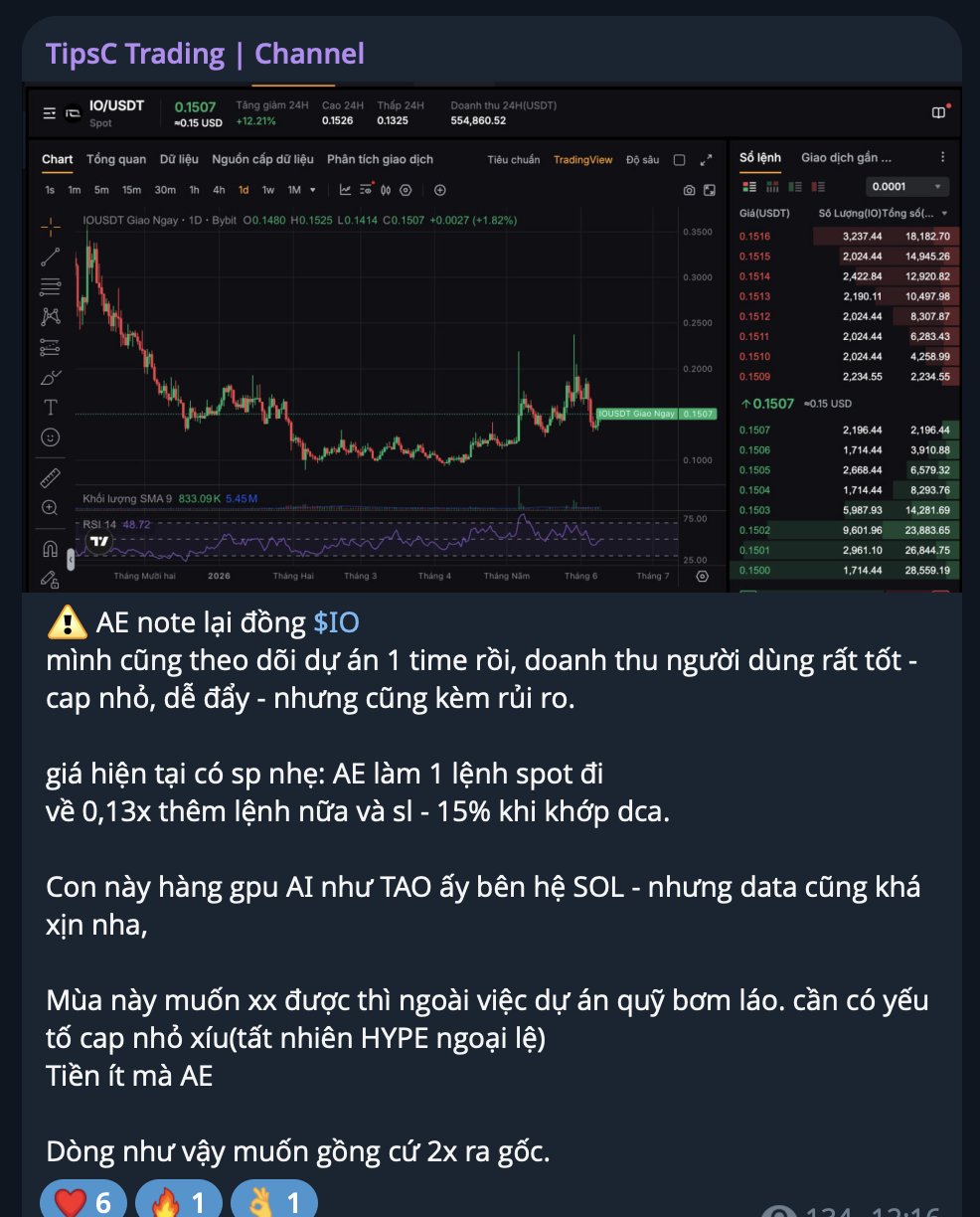
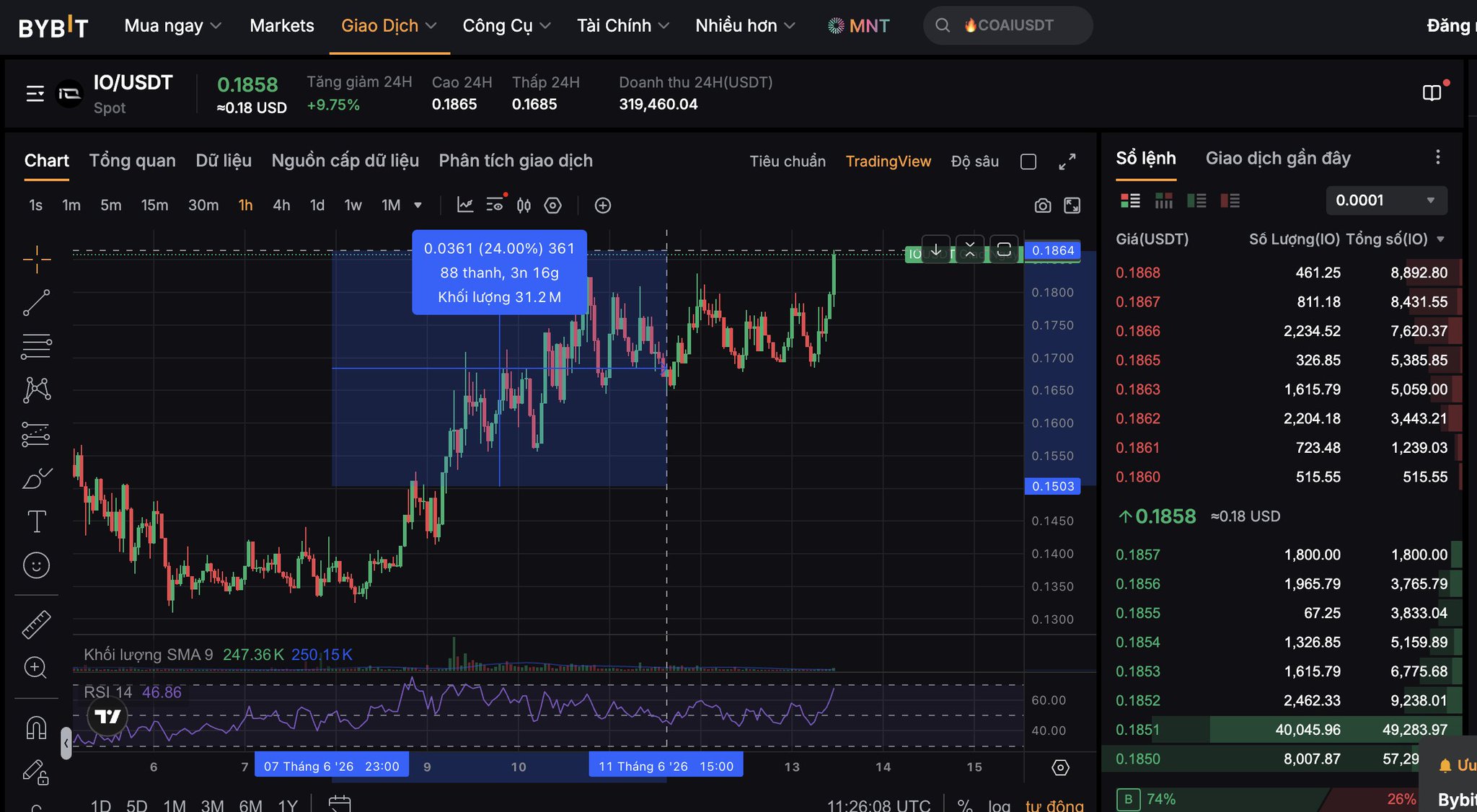
Push the remaining $IO to AE to take the whole thing, then through which AI Agent? https://t.co/5aJtDBz07R
 NHAT HUY Founder Trader C23.70K @josnhathuy
Coin rebounds strongly this season #AI $TAO 🚀 a consistent performer throughout the year :)) https://t.co/7WScLNHL6W
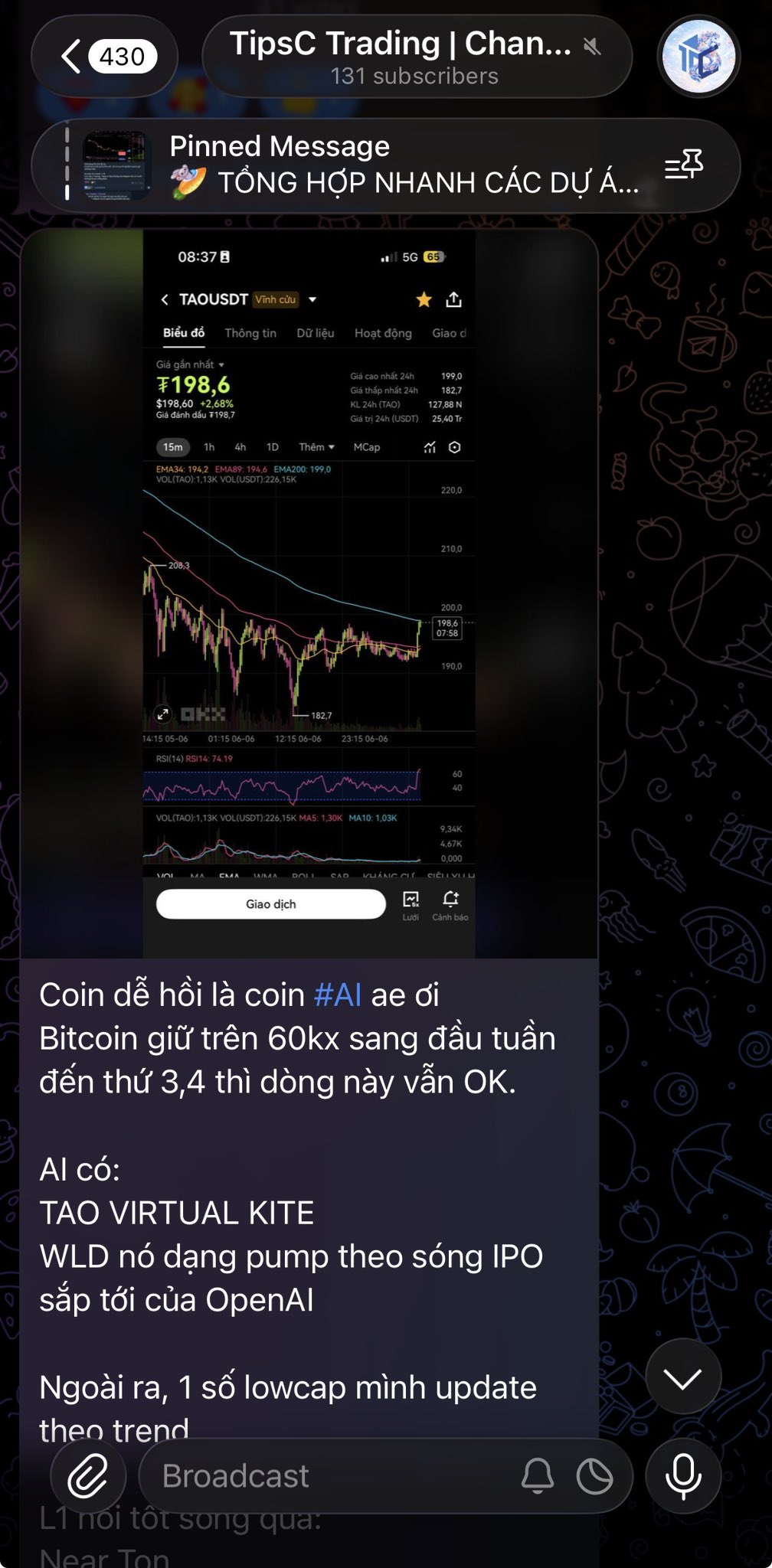
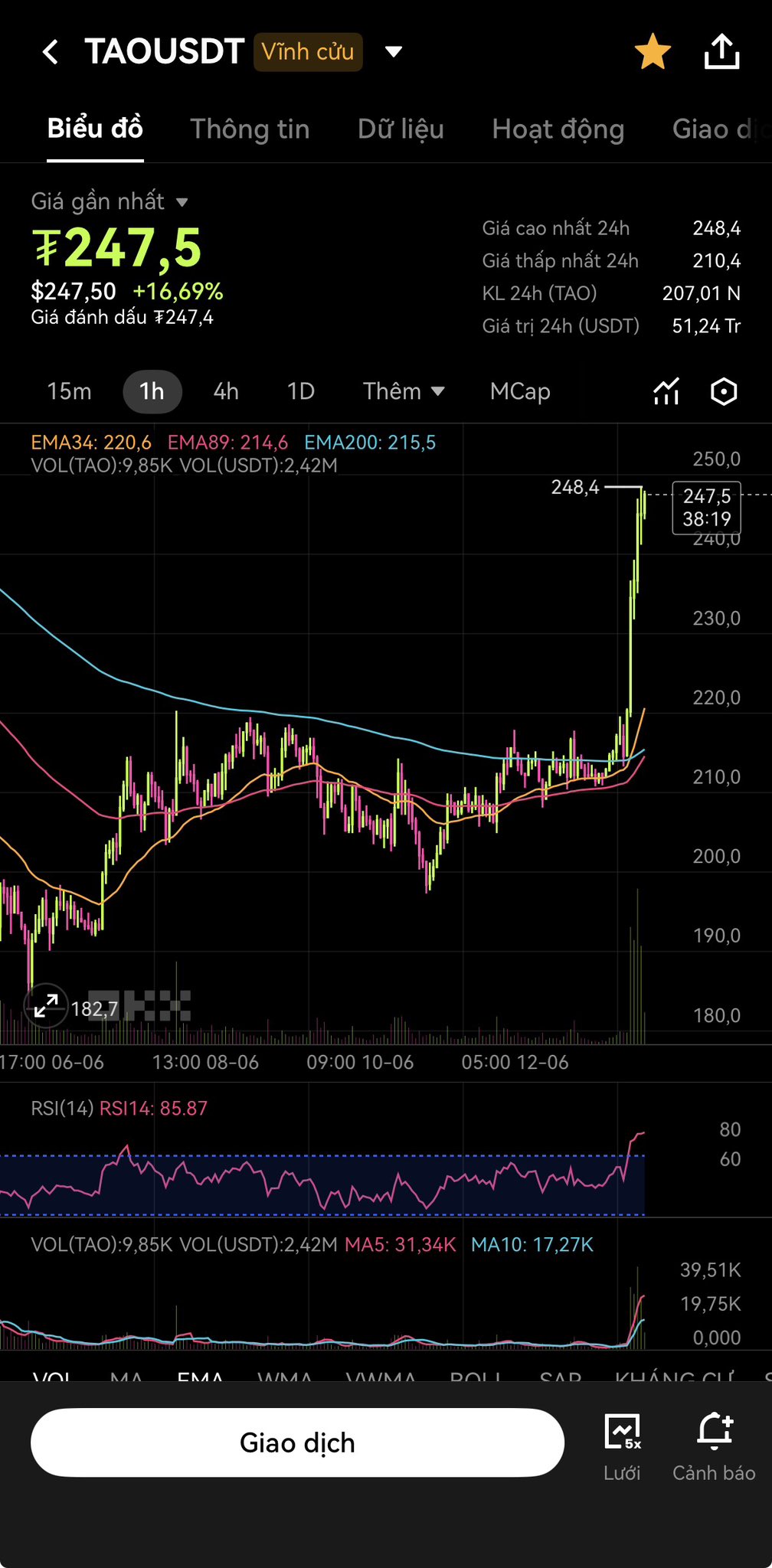 18 3 2.71K 閱讀原文 >釋出後IO走勢極度看漲The author is bullish on IO and TAO, believes AI tokens are strong, suggests focusing on short-term opportunities for IO, and sees TAO having doubling potential.
 Blockster Media Influencer A83.16K @BlocksterCom
⚡ @ionet just hit some major milestones. $8M enterprise contract 4B+ AI tokens processed daily Plans to burn at least 12M $IO tokens As demand for AI compute grows, decentralized infrastructure is starting to generate real revenue. 👇 @solana https://t.co/DEoBzDj5bx
62 35 5.76K 閱讀原文 >釋出後IO走勢看漲IO achieves $8M enterprise contract and processes 4B AI tokens daily, outlook bullish CoinDesk Media Researcher D3.71M @CoinDesk
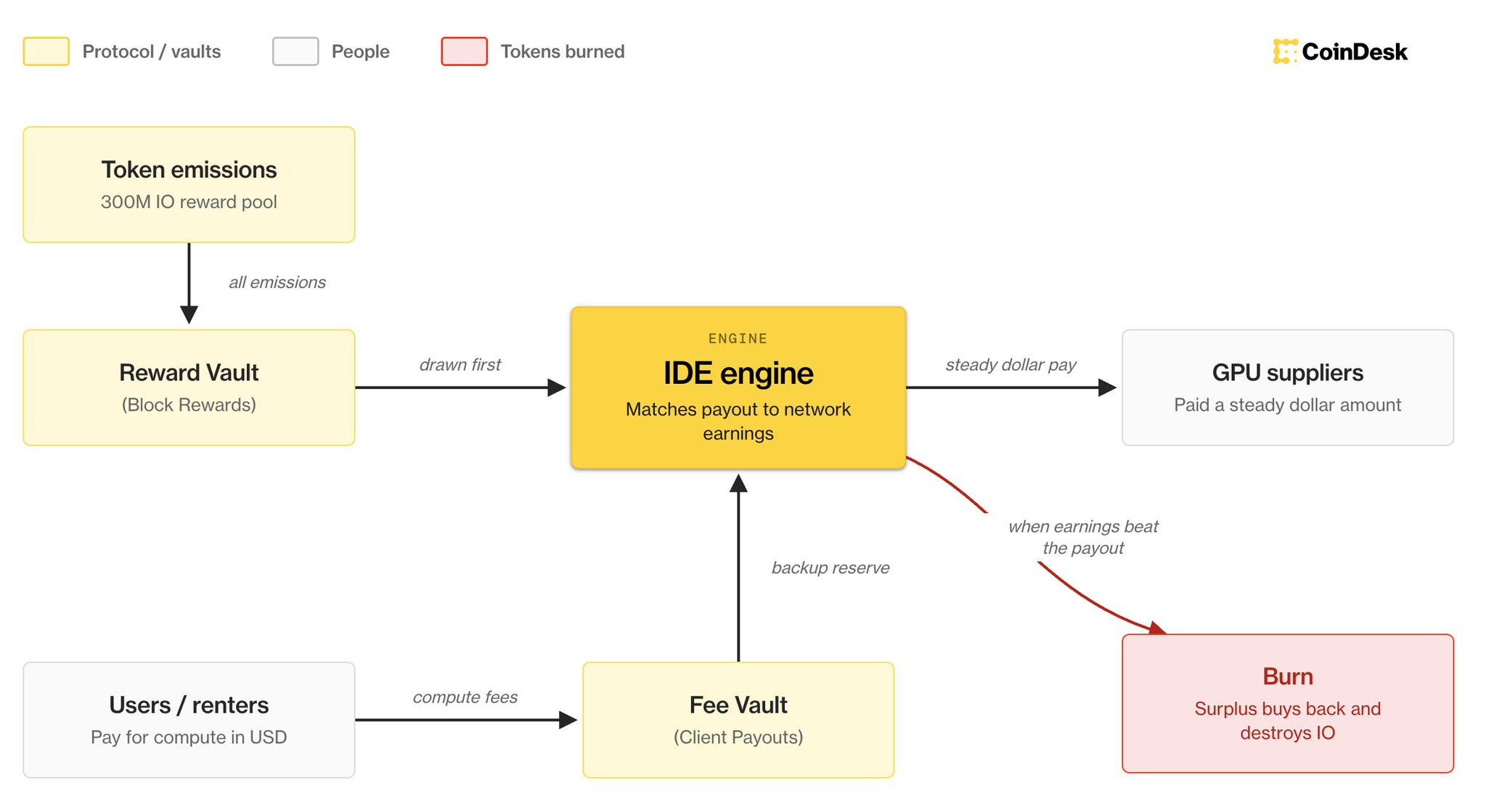
DATA: @ionet has redesigned its tokenomics around the Incentive Dynamic Engine (IDE), launched in June 2026, which ties emission and burns directly to network earnings. The IDE pays suppliers a stable dollar target, funded first by emissions and then earnings when emissions fall short.
 CoinDesk Media Researcher D3.71M @CoinDesk
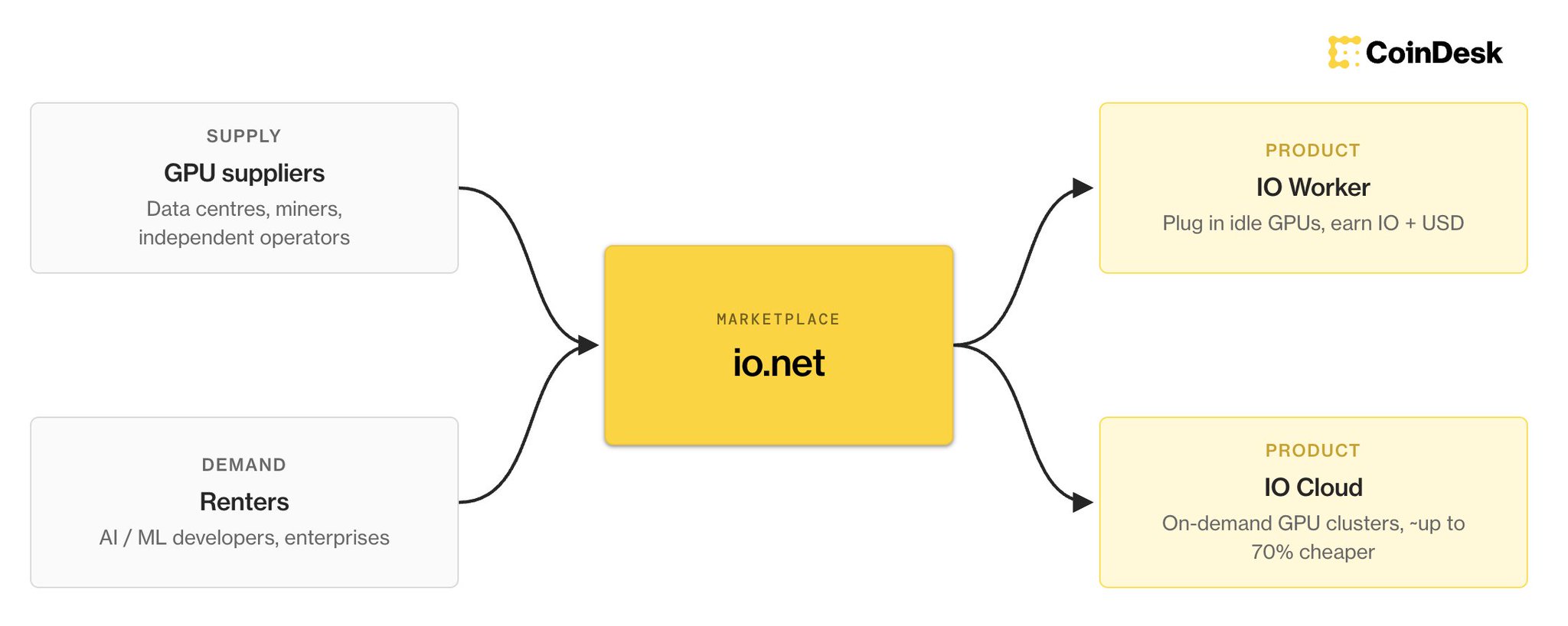
https://t.co/vekY4V4gbT operates a decentralised GPU marketplace, aggregating idle compute from tens of thousands of suppliers and renting it to AI and machine-learning workloads. Built on Solana, it pulls together GPUs across 138 countries, undercutting on-demand pricing from the big clouds such as AWS by roughly 70%. Renters get compute through IO Cloud; suppliers plug their GPUs in through IO Worker.
 CoinDesk Media Researcher D3.71M @CoinDesk
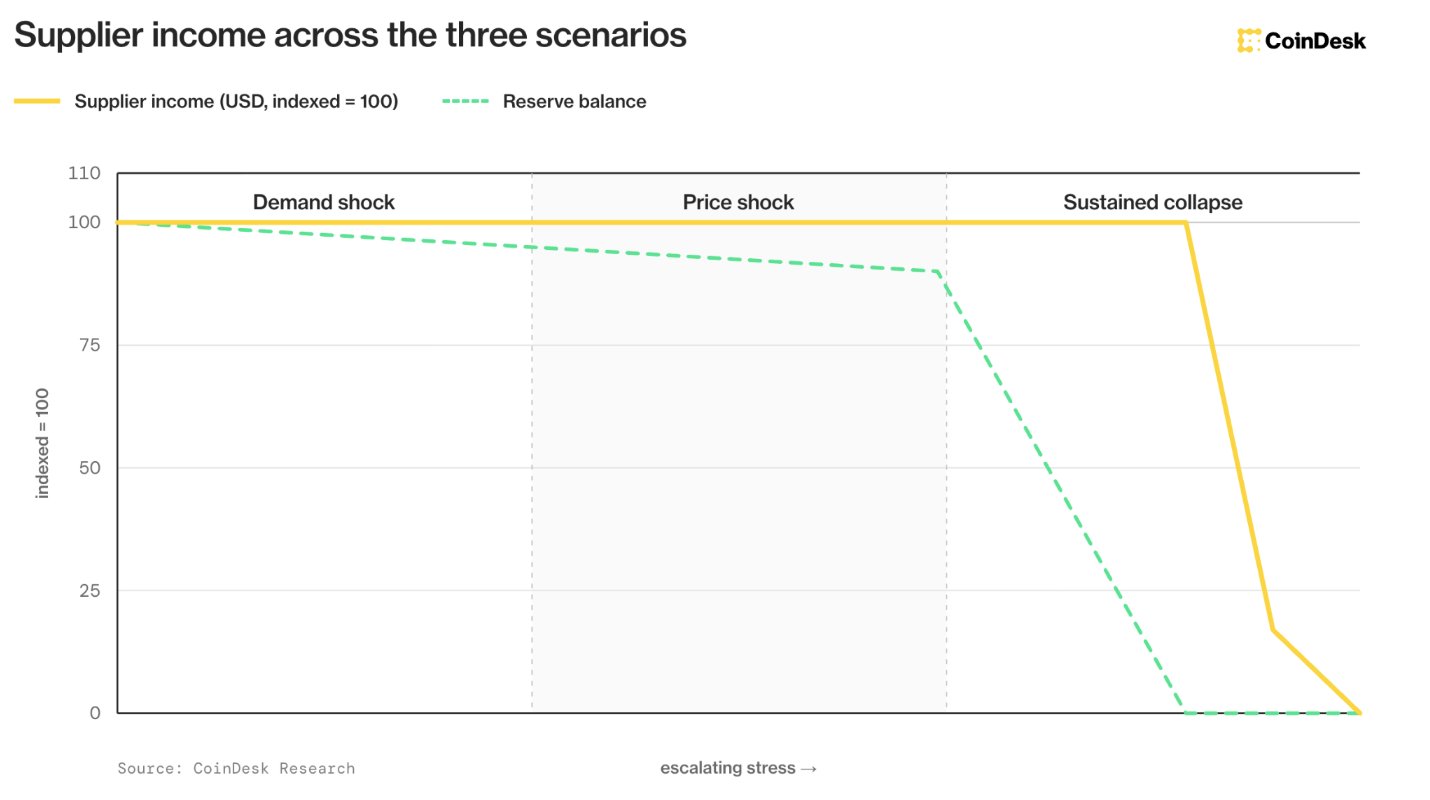
Those suppliers used to be paid on a fixed emission schedule that ignored demand, so supply swelled while real usage didn't. The IDE was built to fix that, and CryptoEcon Lab stress‑tested it against a 50% price crash and a 55% demand drop. Supplier income held in both: in the demand drop the engine drew on reserves, and when IO halves the dollar payout is unchanged while emissions rise to meet it. In a sustained collapse, payout obligations decline alongside the active GPU base rather than becoming permanent liabilities.
 CoinDesk Media Researcher D3.71M @CoinDesk
Full report from @CoinDesk Research, commissioned by @ionet: https://t.co/40JiIJanP6
CoinDesk Media Researcher D3.71M @CoinDeskThe IDE is coherent economic design: it stabilises supplier income in dollars and makes net token supply respond to network earnings, issuing into shortfalls and burning into surpluses. It is now live. The signal to watch is the sustainability ratio, network earnings divided by what is owed to suppliers: holding at or above 1 means the engine is burning at least half of block reward emissions, and it eventually turns net‑deflationary as the ratio climbs. https://t.co/vekY4V4gbT has built the engine; what turns it on is demand.
64 17 11.01K 閱讀原文 >釋出後IO走勢極度看漲io.net's new token economic model IDE delivers stable income and implements deflation. OCT News Media Influencer C1.94K @news_oct
https://t.co/hGJPLxGXv9 IDE goes live with its first $IO burn, linking token supply to network demand through revenue-backed buybacks and burns. Read More👇 https://t.co/DfMcE2k9tZ https://t.co/1p5lYDqvTR
 OCT News Media Influencer C1.94K @news_oct
Check key reactions on "The Talk"🔽 https://t.co/Z211VXLjxF
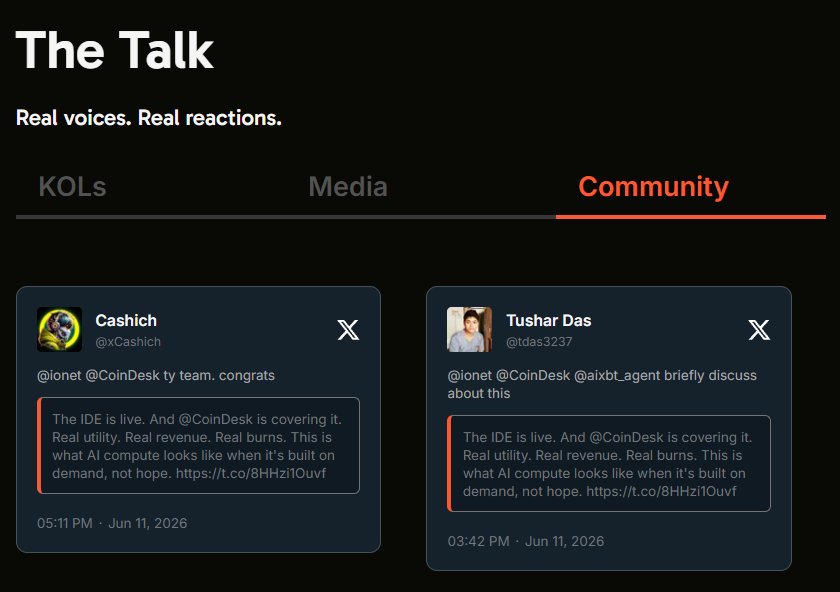 11 1 214 閱讀原文 >釋出後IO走勢看漲io.net IDE launches and conducts its first $IO burn, linking token supply to network demand through buybacks and burns.
 Shelby TA_Analyst Trader B269.62K @CryptoNewton
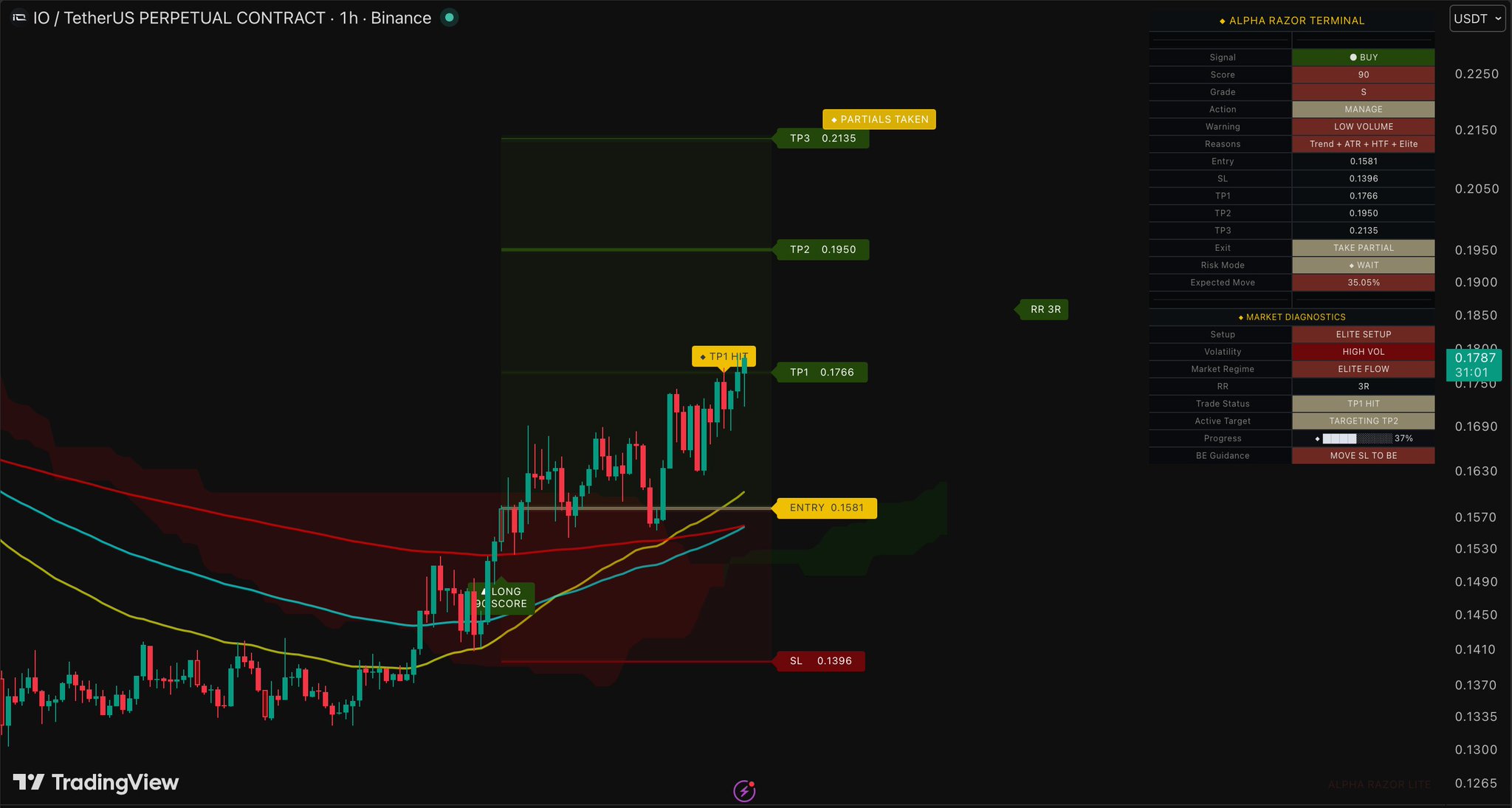
$IO just hit TP1. Partials paid. Risk removed. Position protected. Now the market can decide how much more it wants to give. The best feeling in trading? Watching a position run after you've already secured profit. 🔥📈 https://t.co/1kEYdPYKoy
 Shelby TA_Analyst Trader B269.62K @CryptoNewton
$IO 👀 https://t.co/h4cWE0PrQJ
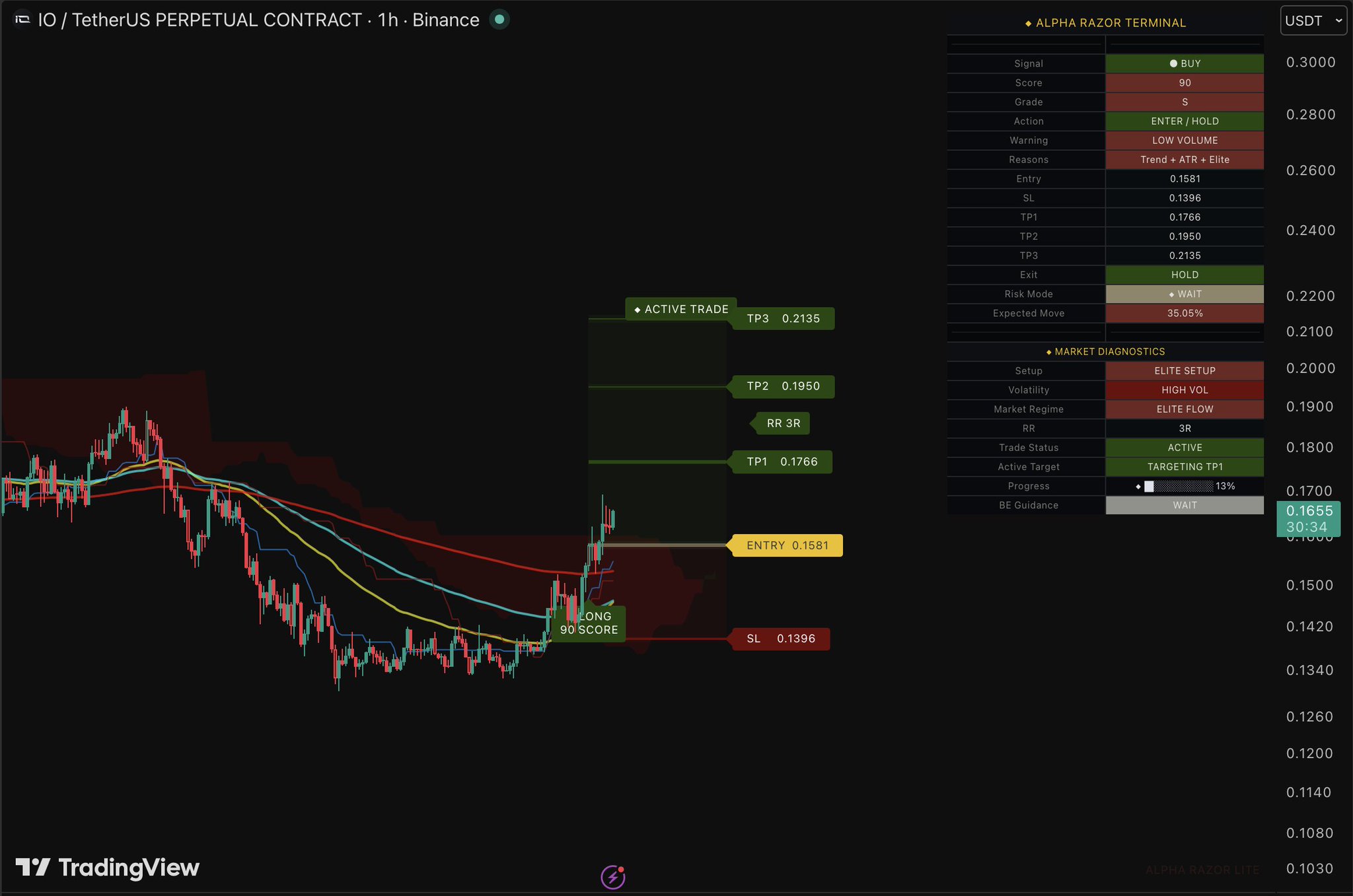 26 4 6.81K 閱讀原文 >釋出後IO走勢極度看漲$IO coin successfully reached the first take-profit level, and traders have locked in part of the profit and removed risk.
- 釋出後IO走勢極度看漲$IO coin successfully reached the first take-profit level, and traders have locked in part of the profit and removed risk.