Scaled UI Extension (ERC-8056) vs Rebasing Tokens🔍
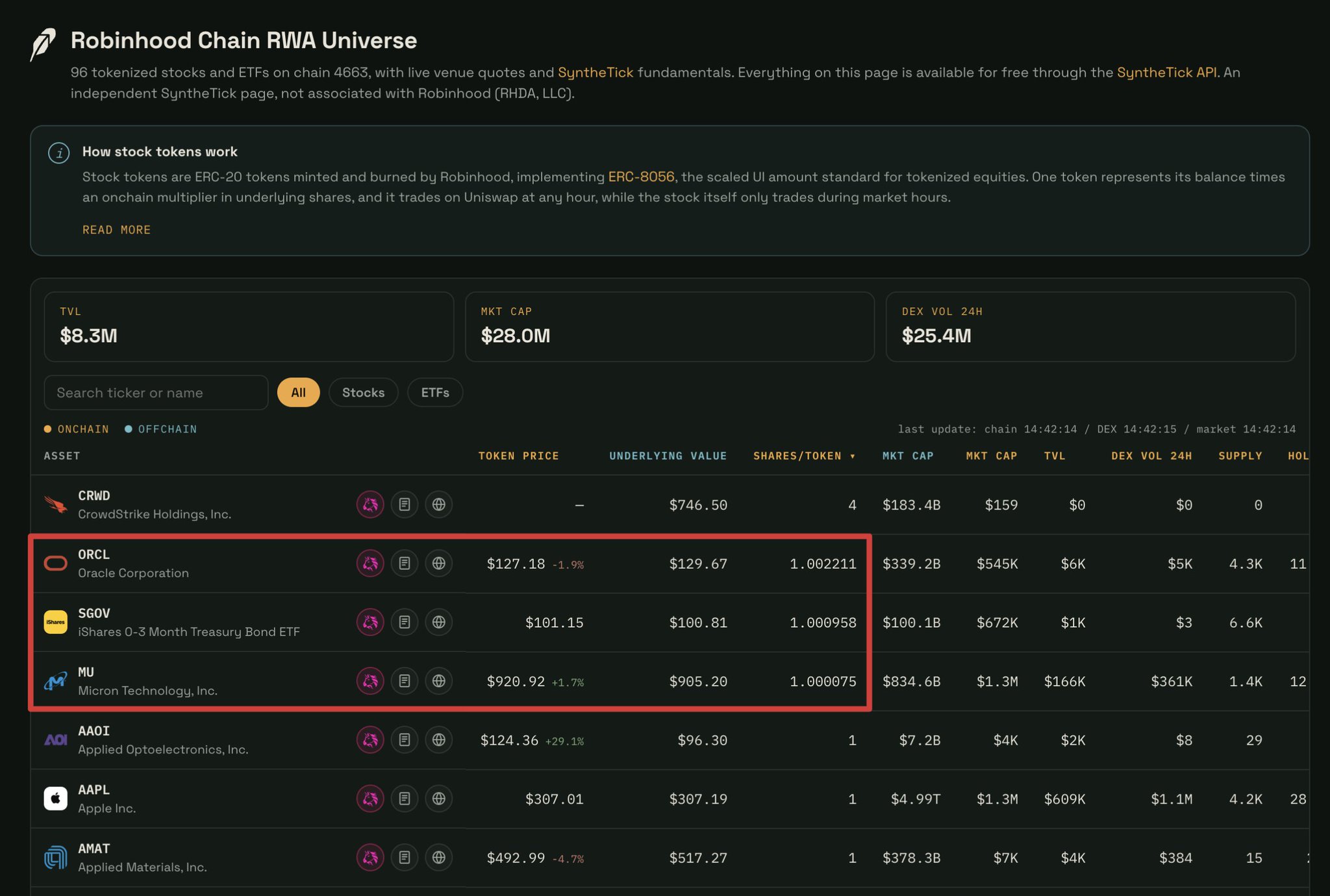
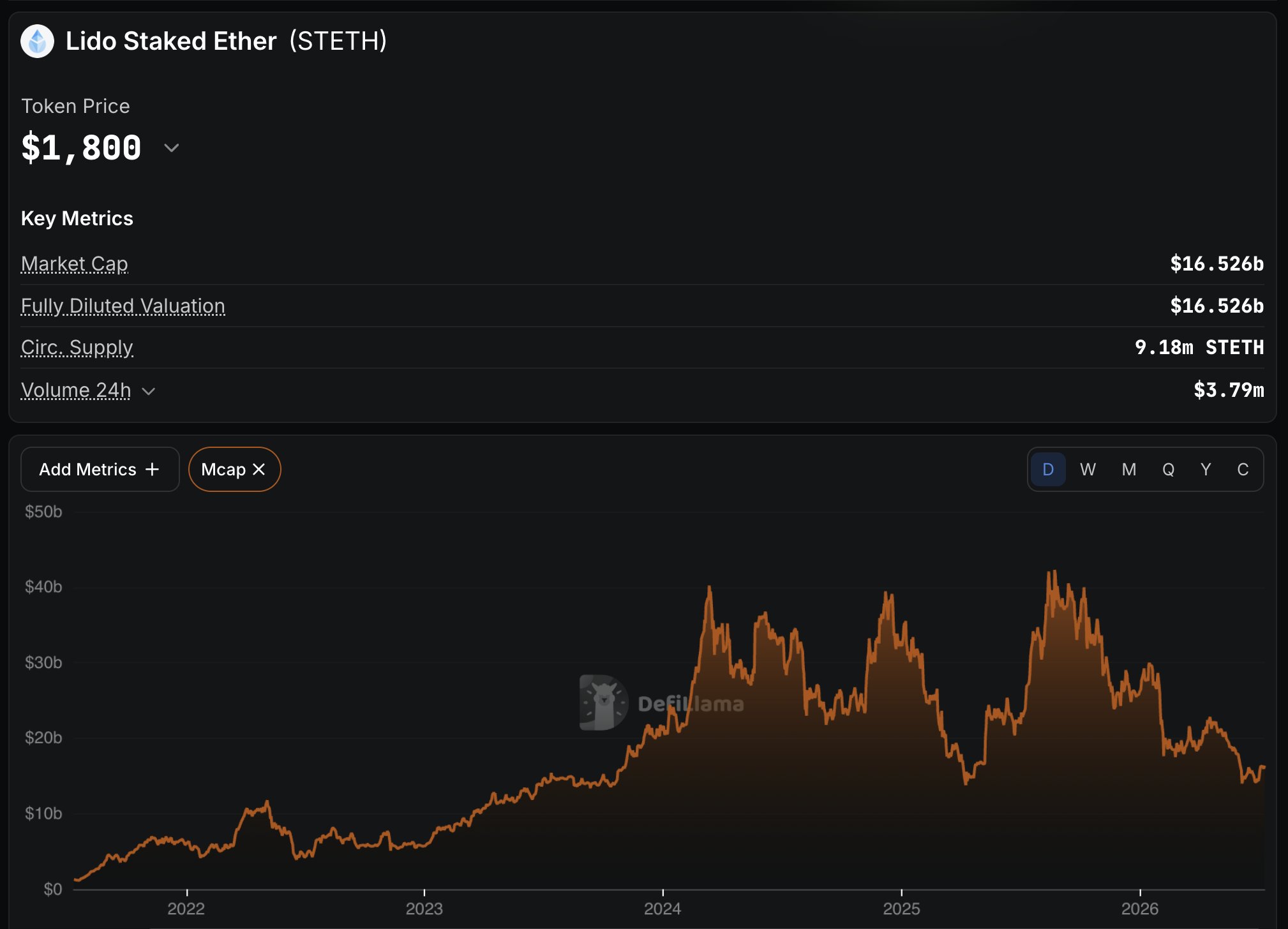
@RobinhoodCrypto stock tokens implement ERC-8056 (see quoted post), and it's easy to assume they work like ethereum:0xae7ab96520de3a18e5e111b5eaab095312d7fe84, the most popular rebasing token. They don't.
The core difference
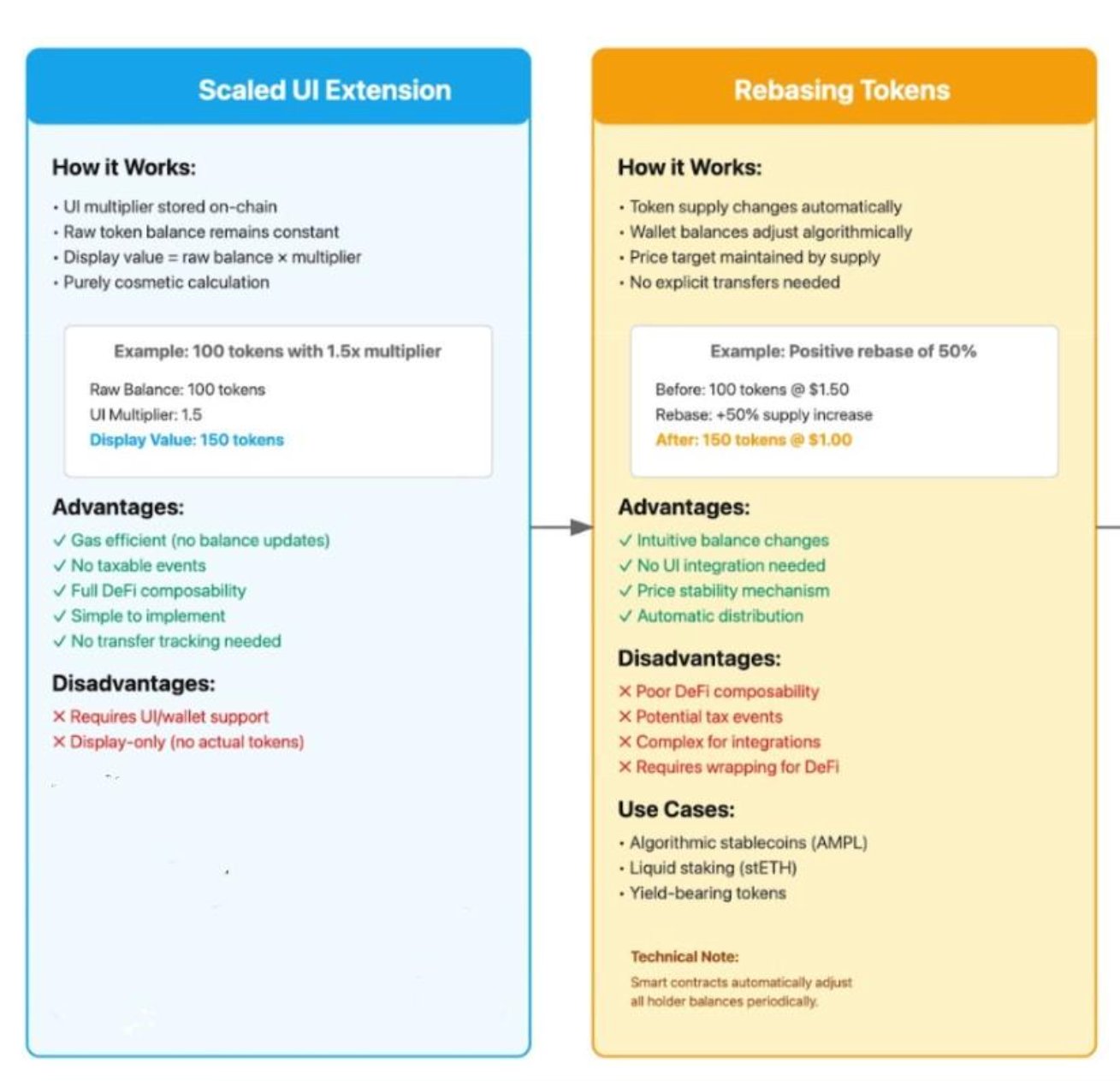
Rebasing tokens change your balanceOf and the total supply automatically. ERC-8056 never touches balances: the raw balance stays constant, and an on-chain UI multiplier changes instead.
🟢 One advantage each
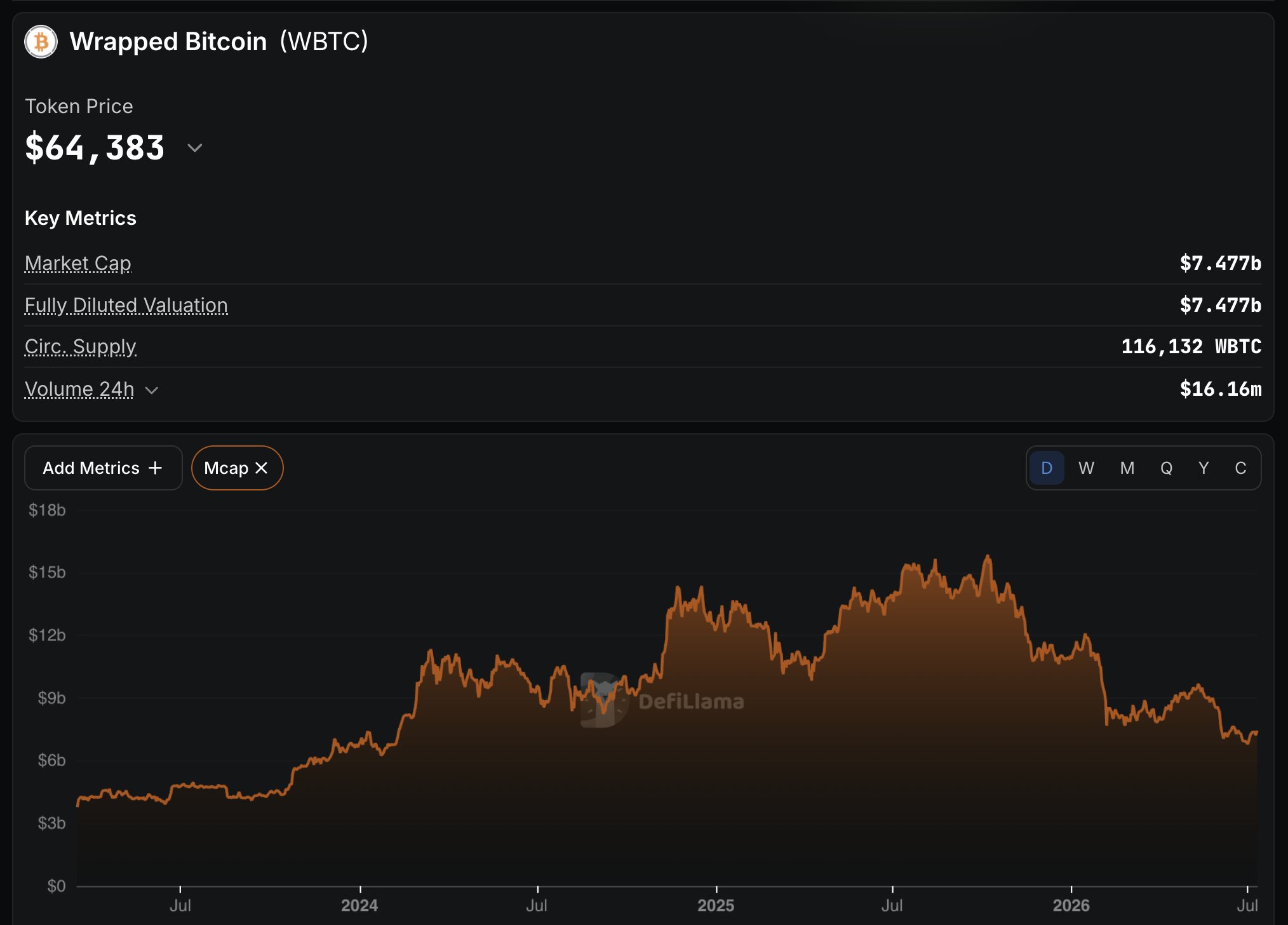
ERC-8056 tokens need no wrapper (no ethereum:0x7f39c581f595b53c5cb19bd0b3f8da6c935e2ca0 equivalent) and plug into existing DeFi as-is. Rebasing is more intuitive for holders: your balance visibly grows, no UI integration needed.
🔴 One disadvantage each
ERC-8056 pushes the burden to the UI: without proper frontend support, users don't know what they're actually buying. Rebasing pushes it to protocols: poor composability makes every DeFi integration harder (that's why wstETH exists).
⬇️ Takeaway
New standards and experiments on top of ERC-20 are always worth watching, but they only work if the changes are transparent to both developers and users, in the docs and in the apps.