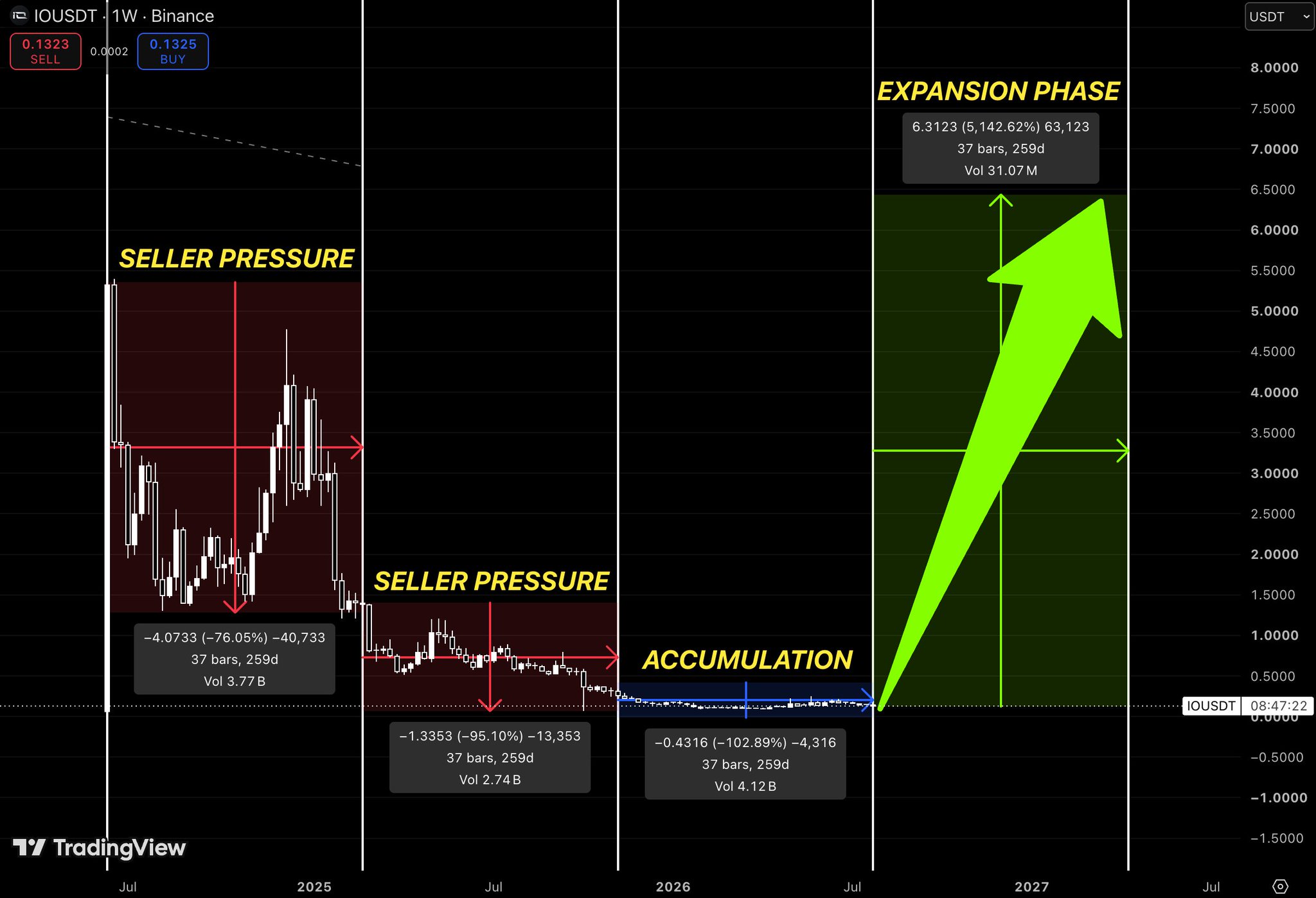
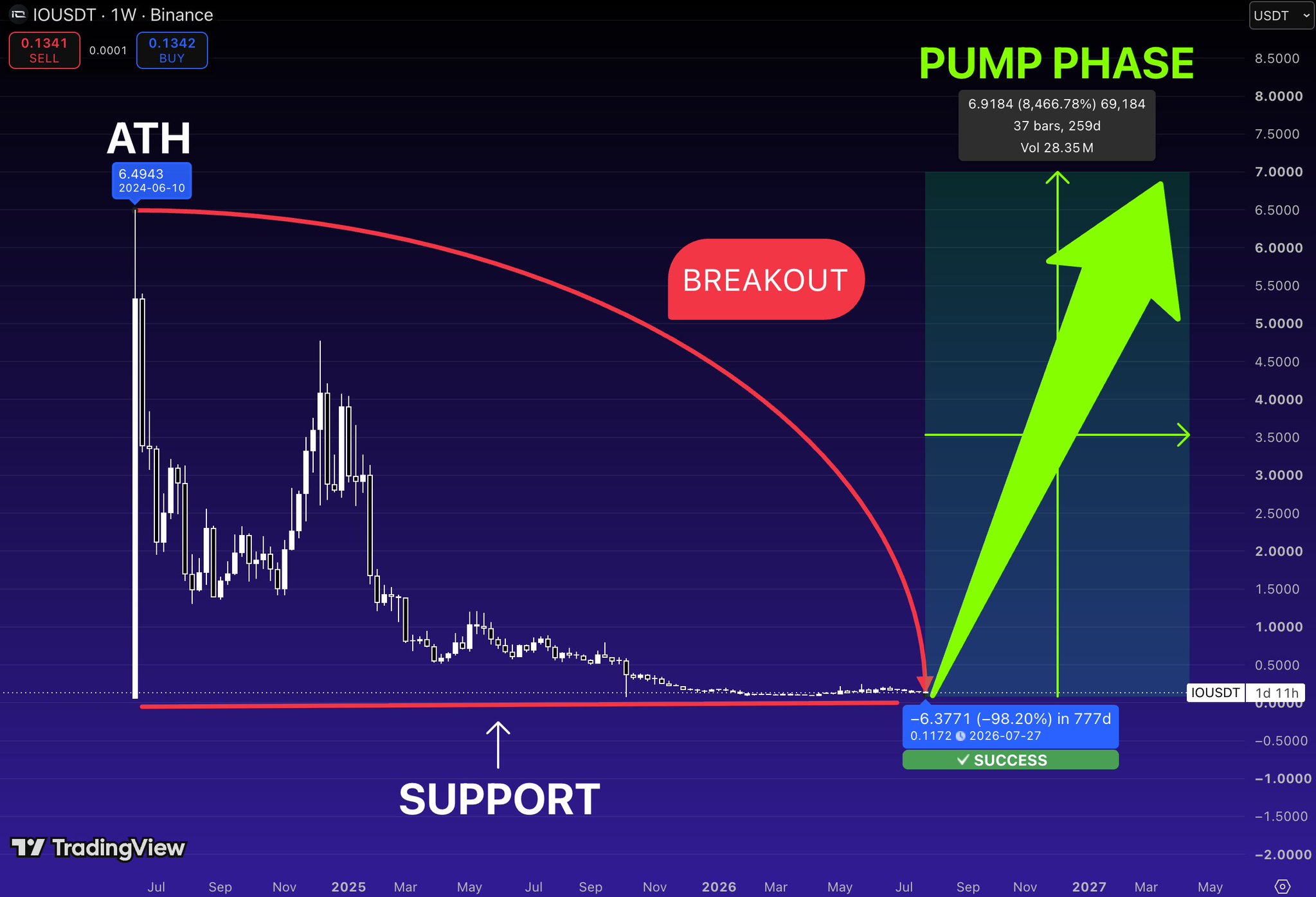
$IO has gone through every stage of the cycle.
First came aggressive distribution.
Then months of relentless selling.
Now?
Almost complete exhaustion.
The chart has spent a long time compressing inside a tight accumulation range, where volatility has nearly disappeared.
That’s often the final stage before expansion.
The biggest mistake traders make is expecting excitement before the move begins.
In reality, the market becomes boring first.
That’s exactly what accumulation looks like.
Once buyers regain control, the transition from accumulation to expansion can happen surprisingly fast.
The strongest rallies usually don’t start after bullish news.
They start when nobody is paying attention.
If this base continues to hold, $IO has the potential to transition from a long accumulation phase into a powerful expansion cycle.
Sometimes the quietest charts end up making the loudest moves.