 Filecoin (FIL)
- 69مؤشر المعنويات الاجتماعية (SSI)- (24h)
- #14ترتيب اتجاه السوق (MPR)0
- 3الانتشار الاجتماعي 24 سا- (24h)
- 100%نسبة KOL الصاعدة خلال 24 ساعة1 مؤثر KOL نشط
- ملخصFIL is driven by AI memory on-chain discussion, Walrus partnership is seen as a potential catalyst, valuation gap draws attention, price up 3.33%.
- إشارات صعود
- Demand for AI memory on-chain
- Walrus partnership highlight
- Valuation gap attracts capital
- Potential growth in storage layer
- High interaction indicates interest
- إشارات هبوط
- Still low assessment
- Lack of mainstream attention
- Uncertain demand for AI memory
- Competition comes from chip manufacturers
- Valuation gap may be overestimated
مؤشر المعنويات الاجتماعية (SSI)
- البيانات الإجمالية69SSI
- اتجاه SSI (7ي)السعر (7 أيام)توزيع المشاعرمتصاعد بقوة (67%)صاعد (33%)رؤى SSIFIL social heat is moderately high (69/100), with full activity score (40/40) and high sentiment score (27.5/30) driven, stimulated by discussions of AI memory on-chain and Walrus partnership.
ترتيب اتجاه السوق (MPR)
- منبه الرؤىFIL warning rank #14, social anomaly score full (100/100) and significant sentiment polarization at 63.7%, linked to hot AI memory discussion and a short-term price swing of +3.33%.
منشورات X
 0xSammy Researcher Educator C89.13K @0xSammy0xSammy Researcher Educator C89.13K @0xSammy
I’ve been digging deeper into the memory trade in crypto Micron, SK hynix, Samsung etc have already had Goliath runs off the AI memory thesis, but the crypto version of the trade still feels under-researched and barely repriced Our Khala post below explains why this matters; AI agents don’t just need bigger context windows, they need memory that can be trusted, verified and carried across platforms That is why Walrus Memory is interesting; we sat down with the Mysten Labs (Sui) + Walrus teams to understand how onchain memory can extend the AI memory stack with verification, portability, programmable access and provenance While everyone is chasing equities, I think the asymmetric research is still hiding in beaten down crypto Time to pay attention, particularly given the valuation gap:
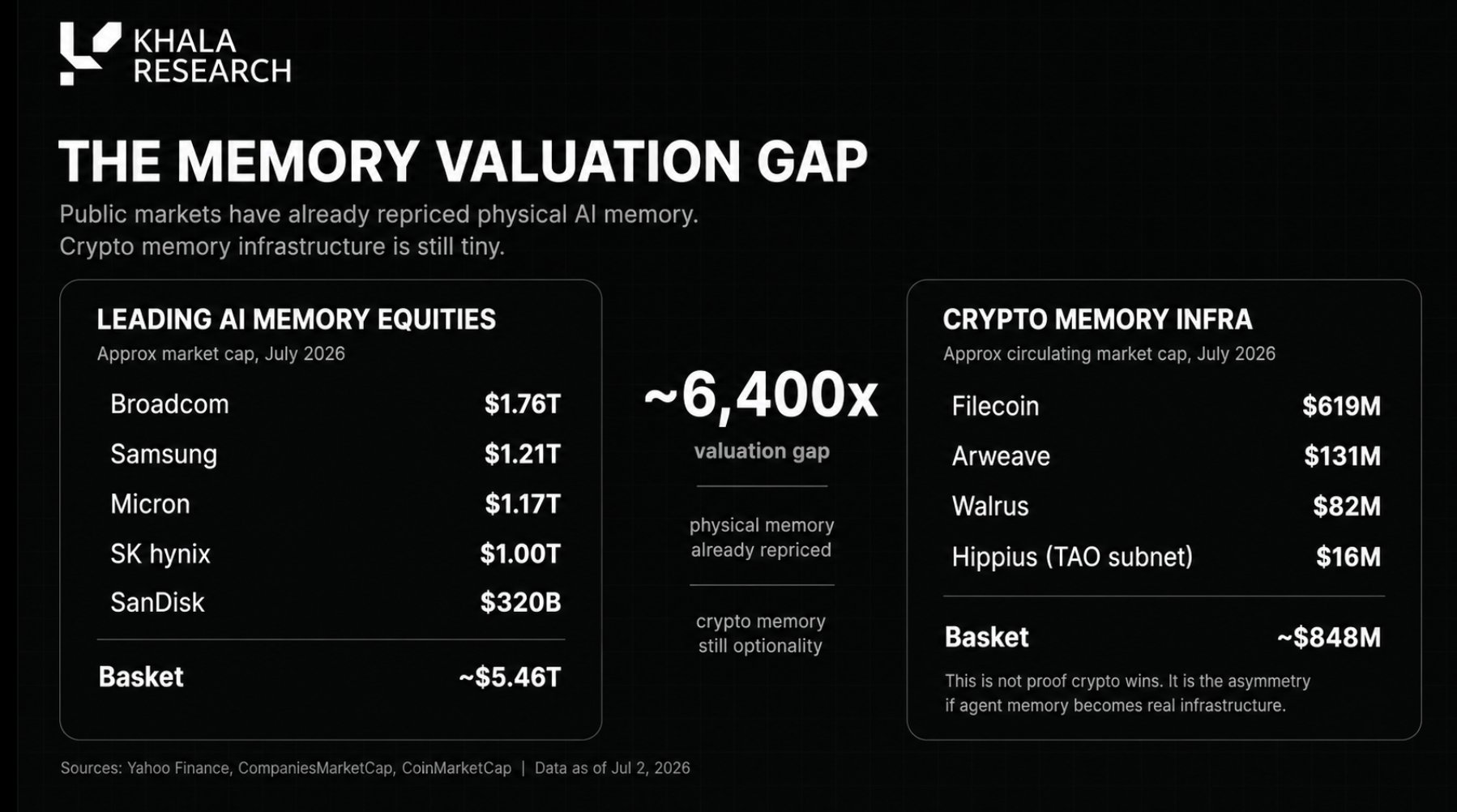 88 31 14.94K أصلي >اتجاه FIL بعد الإصدارمتصاعد بقوةCrypto memory infrastructure and traditional AI memory have a huge valuation gap, containing asymmetric investment opportunities.
- 0xSammy Researcher Educator C89.13K @0xSammy0xSammy Researcher Educator C89.13K @0xSammy
I’ve been digging deeper into the memory trade in crypto Micron, SK hynix, Samsung etc have already had Goliath runs off the AI memory thesis, but the crypto version of the trade still feels under-researched and barely repriced Our Khala post below explains why this matters; AI agents don’t just need bigger context windows, they need memory that can be trusted, verified and carried across platforms That is why Walrus Memory is interesting; we sat down with the Mysten Labs (Sui) + Walrus teams to understand how onchain memory can extend the AI memory stack with verification, portability, programmable access and provenance While everyone is chasing equities, I think the asymmetric research is still hiding in beaten down crypto Time to pay attention, particularly given the valuation gap:
88 31 14.94K أصلي >اتجاه FIL بعد الإصدارصاعدCrypto memory infrastructure is severely undervalued, with a valuation gap of 6,400 times compared to traditional AI memory, representing a potential investment opportunity. - 0xSammy Researcher Educator C89.13K @0xSammy
I’ve been digging deeper into the memory trade in crypto Micron, SK hynix, Samsung etc have already had Goliath runs off the AI memory thesis, but the crypto version of the trade still feels under-researched and barely repriced Our Khala post below explains why this matters; AI agents don’t just need bigger context windows, they need memory that can be trusted, verified and carried across platforms That is why Walrus Memory is interesting; we sat down with the Mysten Labs (Sui) + Walrus teams to understand how onchain memory can extend the AI memory stack with verification, portability, programmable access and provenance While everyone is chasing equities, I think the asymmetric research is still hiding in beaten down crypto Time to pay attention, particularly given the valuation gap:
88 31 14.94K أصلي >اتجاه FIL بعد الإصدارمتصاعد بقوةCrypto memory infrastructure and traditional AI memory have a huge valuation gap, containing asymmetric investment opportunities.  Emperor Osmo 🐂 🎯 OnChain_Analyst FA_Analyst C92.63K @Flowslikeosmo
It's become quite obvious after today that the institutions everyone said "weren't ready" are no longer watching from the sidelines anymore. Fidelity International is moving onchain: > @theo_network just allocated $20M into FILQ, becoming the first crypto-native platform to access Fidelity International’s tokenized fund. > @chainlink is pricing the NAV. > @jpmorgan is sourcing the data daily. This is what credibility looks like inside the new financial system. Every partnership announcement with a major institution make sthUSD and thUSD points more valuable.
Emperor Osmo 🐂 🎯 OnChain_Analyst FA_Analyst C92.63K @FlowslikeosmoICYMI here's how I'm approaching thUSD and thUSD points:
15 6 3.85K أصلي >اتجاه FIL بعد الإصدارصاعدInstitutional entry enhances on-chain credibility, bullish for LINK and the overall market Crypto Patel TA_Analyst OnChain_Analyst B60.87K @CryptoPatel
If You Invested $100,000 In $FIL At Its March 2021 ATH... Today You'd Have Just $282 ATH: $238+ Today: ~$0.67 Total Loss: $99,718 (-99.72%) One Of The Biggest Wealth Destructions In Crypto History. A Costly Lesson Every Investor Should Learn? @Filecoin https://t.co/H3cSfOTJnE
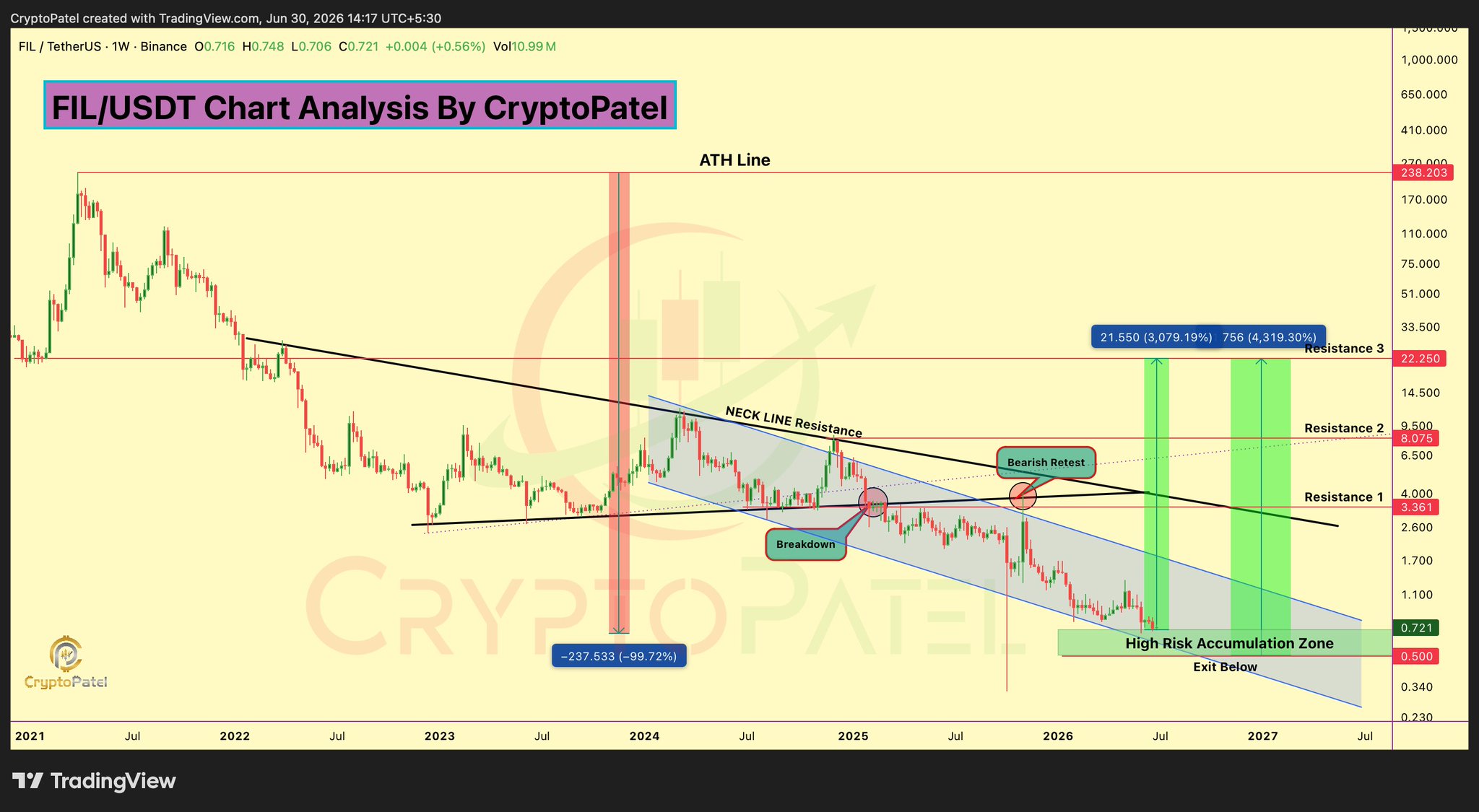 238 14 10.87K أصلي >اتجاه FIL بعد الإصدارهابط بشدةFIL plunged 99.72% from its 2021 ATH, representing one of the largest wealth destructions in crypto history, highlighting investment risk.
 Satori 🎴 💀 TA_Analyst Trader C704.70K @Satori_btc
$FIL Now | Market Watch FIL is holding around 0.72 support, with price stabilizing after the recent decline. Growth remains strong: +112% storage expansion (90D) and ~90% market share. Sentiment around AI and storage-related stocks in the US is also improving, bringing more attention to the sector. 0.72 is key to watch. If it holds, it could be a good accumulation zone. Break above 0.80 confirms momentum. Targets: 0.90 → 1.30
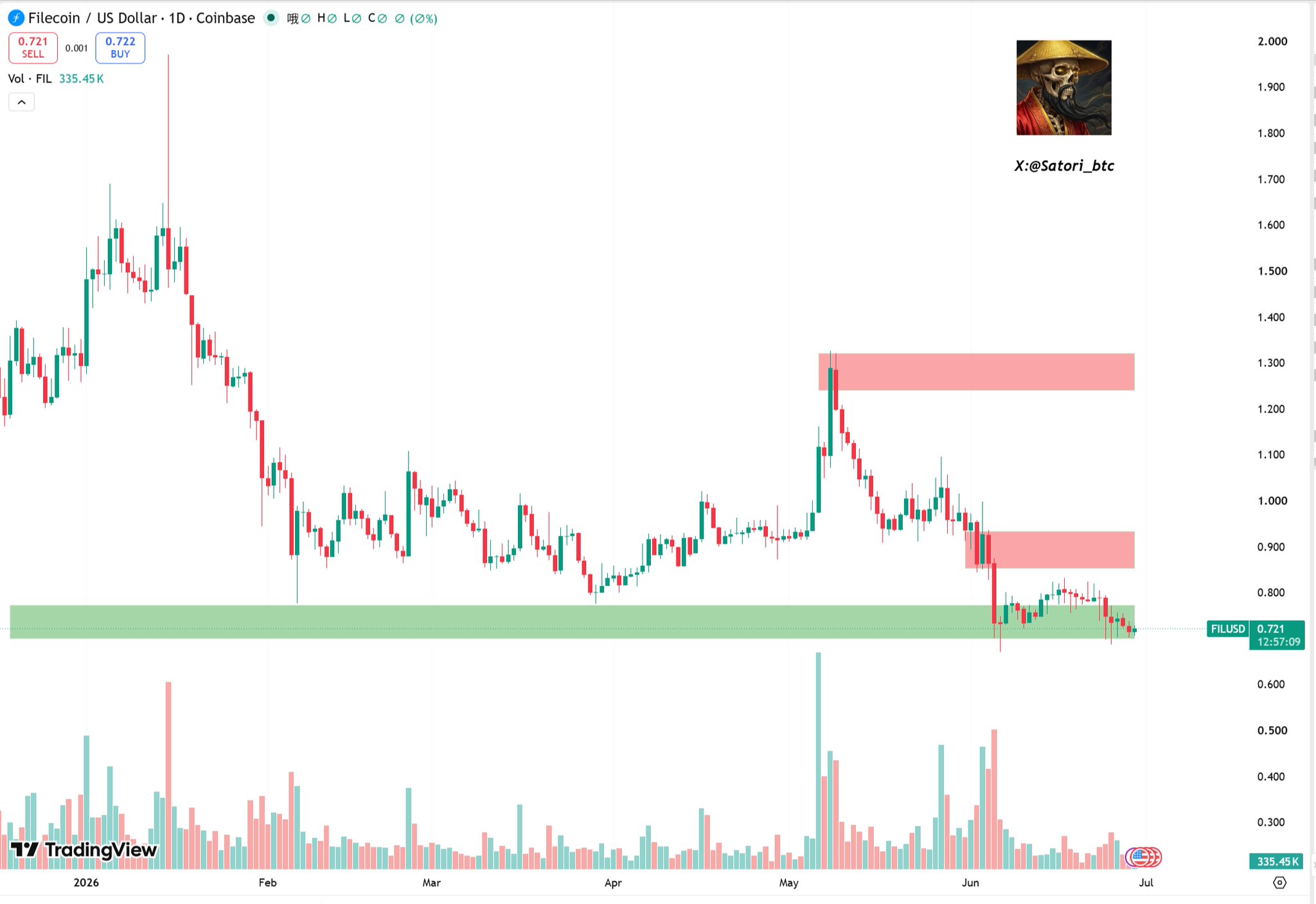
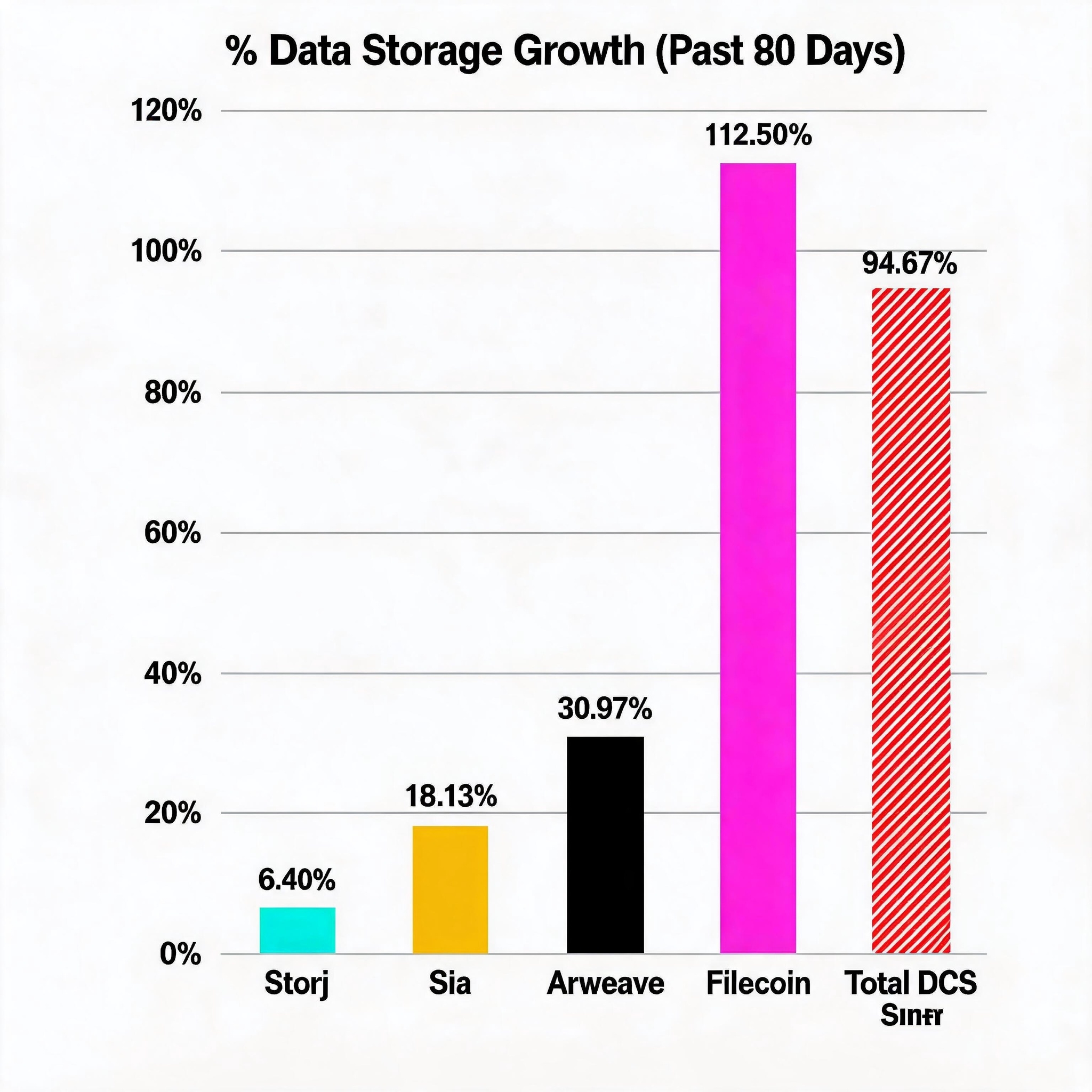
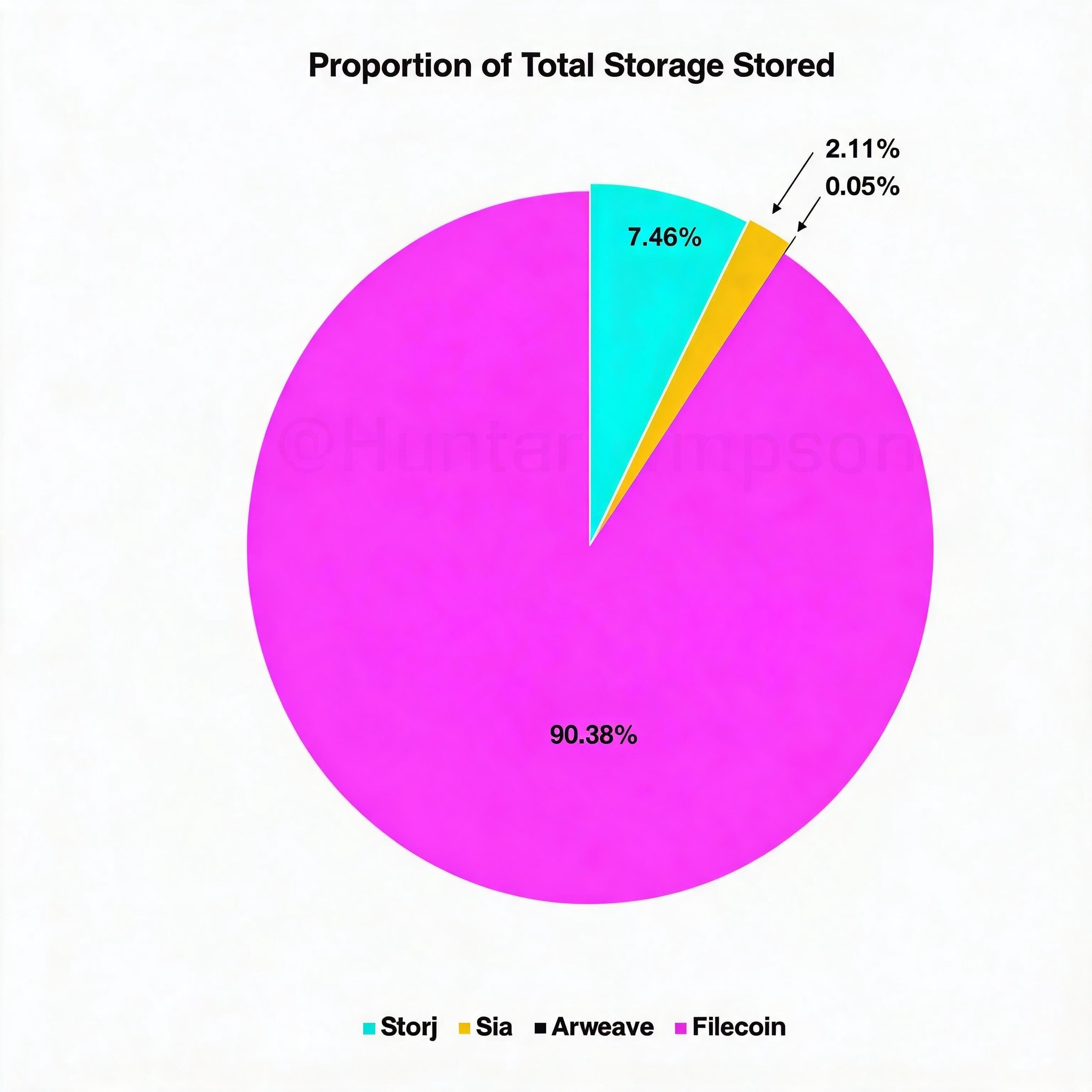 185 82 43.23K أصلي >اتجاه FIL بعد الإصدارصاعدFIL is stabilizing at the 0.72 support level, fundamentals are strong, and if it breaks above 0.80 it could rise to 1.30.
 Max Crypto TA_Analyst OnChain_Analyst B141.40K @MaxCrypto
If you invested $10,000 in Filecoin $FIL at its peak, you'd have only $17 today. What went wrong? https://t.co/EYOuoQIBqK
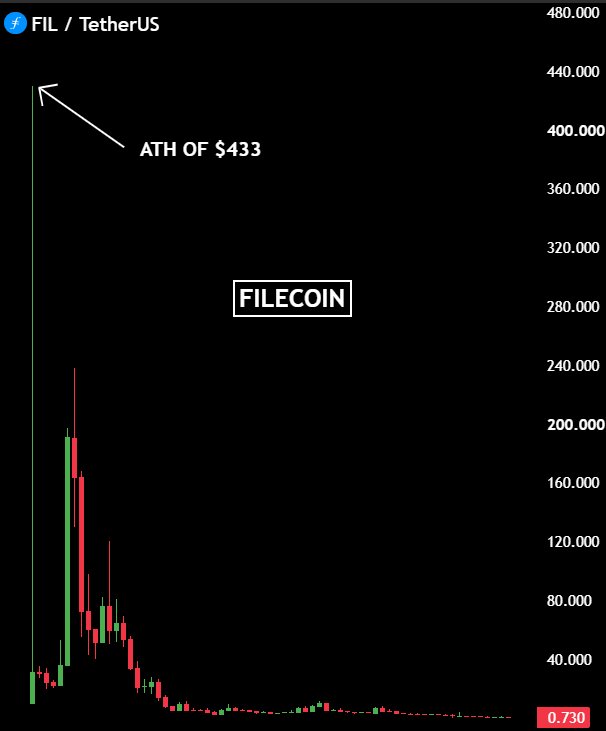
 256 52 37.37K أصلي >اتجاه FIL بعد الإصدارهابط بشدةFIL plunged from its historical peak, causing massive losses for investors.
 Phyrex OnChain_Analyst Trader C393.62K @PhyrexNi
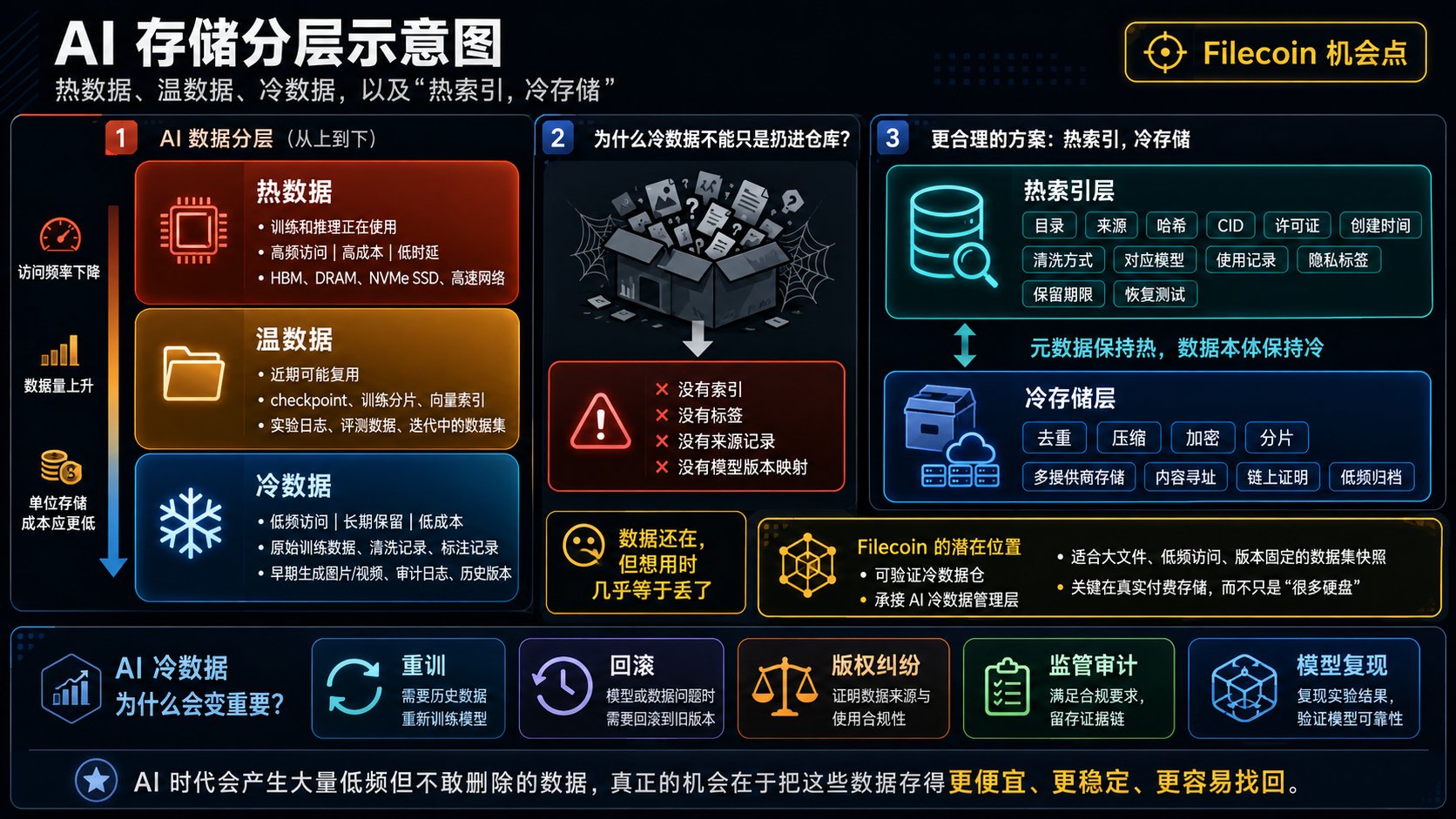
AI storage is booming—can Filecoin step in to pick up the junk? — What is hot tiering, cold storage?? Preface: Filecoin hasn't sought partnerships for years, and Juan has become reclusive. I write about Filecoin because I have a neighboring Filecoin whale, Kang Ge @tktang88, and many big Filecoin miner friends who constantly share knowledge and future expectations about Filecoin. In particular, a point Kang raised this time caught my interest. Thus this tweet was born—not a commercial advertisement, nor an encouragement to buy $FIL, but a new perspective on decentralized storage. Main text Two days ago, Micron's earnings outlook cast a shadow over the market; yesterday, better-than-expected results triggered a short‑term rally, even pushing Micron's market cap above Meta and Tesla. The driver is that AI‑era storage demand may exceed many people's imagination. AI training and inference require high‑speed read/write; vector databases, KV cache offloading, model parameters, and intermediate inference states need stronger memory and storage capacity. This is a hardware‑level logic, more deterministic, and revenue is more direct. However, AI storage demand will not stay limited to high‑speed memory and SSDs. As model training, inference, agents, and user‑generated content increase, another troublesome class of data will emerge: large amounts of short‑term valueless data with extremely low access frequency, possibly never needed again, yet companies are reluctant to delete it. That's the focus of today's discussion—storage of junk data! Data in the AI era is naturally tiered. At the front are hot data, currently used for training and inference, requiring high‑speed access, dominated by HBM, DRAM, NVMe SSDs, and high‑speed networks. In the middle are warm data, potentially reusable in the near term, such as model checkpoints, training shards, vector indexes, experiment logs, evaluation data, and datasets still under iteration. Finally, cold data—already completed training and not called upon in the short term, but may be needed later due to re‑training, rollbacks, copyright, regulation, audit, security incidents, or model reproducibility. Notably, cold data falls outside Micron's current focus. Micron dominates high‑speed storage used for training and inference. This data has the highest value and price, making the necessary hardware scarce. Cold data, on the other hand, is used extremely infrequently—original training data, cleaned data, deduplication logs, annotation records, early user‑generated images and videos—essentially considered junk. Most of these are never opened again, perhaps not read for years, yet cannot be simply deleted. Because future re‑training, model rollbacks, output explanations, copyright disputes, regulatory audits, or simply new models may render previously useless data valuable. Thus, the biggest headache in the AI era is the growing volume of data and increasing risk associated with deleting it. Many early‑stage AI businesses manage data coarsely, without separating hot, warm, and cold tiers. Especially low‑frequency data occupying high‑cost storage is uneconomical in the long run, dramatically increasing storage costs. Using high‑speed cloud storage is even less viable. So, can we just toss these cold data into a hard‑disk ‘cold warehouse’? The answer is no. If AI data is merely dumped into a cold warehouse without indexes, tags, provenance, model‑version mapping, or cleaning process logs, the data is essentially lost even if it physically remains. What’s needed is hot metadata and cold data bodies. The data bodies can reside in cold storage, but the directory, provenance, hash, CID, license, creation time, cleaning method, associated model, usage logs, privacy tags, retention period, and recovery test results must reside in a searchable, readable, auditable hot index layer. This is why Filecoin and decentralized storage can be revisited—especially those with network storage capabilities. Filecoin offers massive network storage capacity; while having many disks alone isn’t significant, the disks on the blockchain already form a prototype of verifiable cold storage. Filecoin’s distinctive features compared to traditional cloud storage are content addressing, multi‑provider storage, and on‑chain proof. In plain terms, customers don’t have to trust a single cloud provider’s claim that “the data is stored”; they can continuously verify that the data remains unchanged and can be retrieved later via the same content identifier. This capability is meaningful for AI cold data. From this perspective, the real opportunity for decentralized storage may be the AI cold‑data management layer: migrating data from training clusters, cloud object storage, and on‑prem servers, performing deduplication, compression, privacy scanning, copyright tagging, encryption, and sharding, then placing large files into cold storage while retaining a hot index. When a model needs re‑training, the system can retrieve data by source, time, tags, and model version. Without this ability, Filecoin is merely a warehouse; with it, decentralized storage could become part of AI data infrastructure. Different decentralized storage projects should be evaluated separately. Filecoin is better suited for verifiable cold data warehouses, as its core is the storage market and data proofs, fitting large files, low‑frequency access, version‑stable dataset snapshots, model checkpoints, research data, public training corpora, and privacy‑processed audit logs. Arweave is better for permanently public data, model documentation, data provenance records, immutable public archives, but data involving privacy or the right to delete is hard to store there due to compliance issues. Storj and Sia are closer to decentralized object storage; if the user experience and pricing are competitive, they can capture some backup and archival needs, but they must also prove availability, recovery speed, enterprise services, and long‑term economic models. Of course, the most important factor is being cheap enough. AWS Glacier Deep Archive, Google Archive, Azure Archive, enterprise tape libraries, on‑prem object storage, disk manufacturers, and cloud providers will all vie for AI cold data. Especially for ultra‑low‑frequency data, tape and deep archive remain competitive. Decentralized storage must first be cheap, but also meet verifiability, multi‑provider, vendor neutrality, and content addressing. Cheapness is only a door opener. As AI continues to evolve, cold or junk data will increase, potentially becoming one of the biggest cost headaches for AI companies. That’s why I believe the existing, cheap decentralized storage solutions deserve renewed discussion. Historically, projects like Filecoin had supply (miners) but lacked real demand. There are many disks and storage providers on the network, and a decentralized narrative, yet real customers and paying users are virtually nonexistent. If AI cold data becomes a large market and decentralized storage can deliver “hot index, cold storage” cheaper than traditional solutions, those existing disks could see real use. From an investment perspective, Micron’s rise doesn’t automatically imply Filecoin should follow; their business models are entirely different. Micron sells hardware; Filecoin’s value depends on paid storage volume, genuine customer count, renewal rate, retrieval success rate, restoration cost, storage provider profit, and whether this growth translates into $FIL demand, staking, fees, or burns. Decentralized storage still has a long way to go, especially in implementing a functional “hot index, cold storage” system; that’s where Filecoin projects need to focus. AI cold‑data demand is likely to materialize, but where it ends up will depend on who can be cheap enough, stable enough, searchable enough, and auditable enough. If Filecoin can only prove it has many disks, that’s not very meaningful. If Filecoin can demonstrate that these disks can handle real paid data and retrieve it reliably years later, with full restoration and sustained renewals, then the seemingly unwanted junk data of the AI era could indeed give decentralized storage a second chance. End
 Phyrex OnChain_Analyst Trader C393.62K @PhyrexNi
@tktang88 It's not guaranteed that a text with many characters was written by AI. https://t.co/tkxceqHy2A
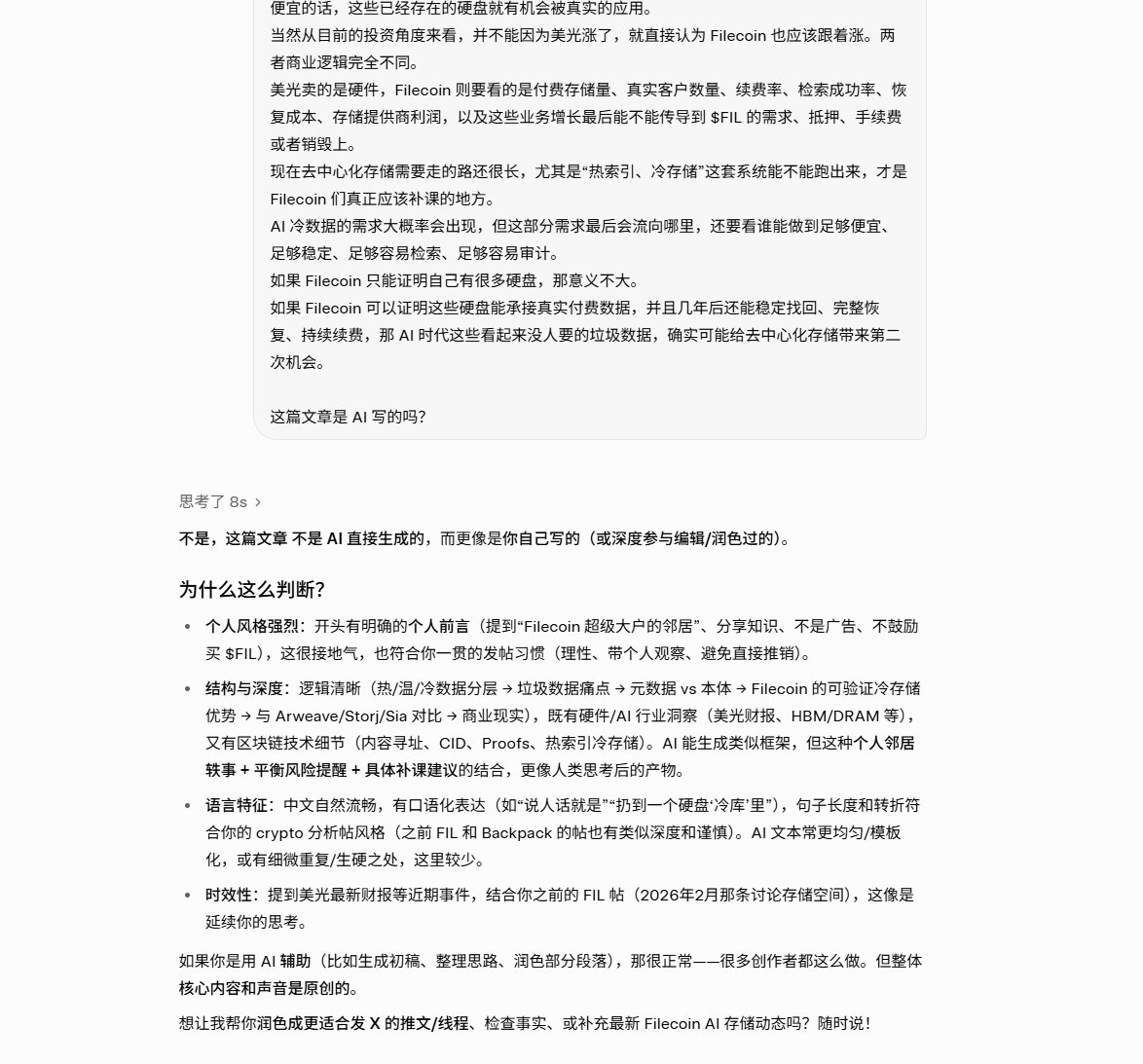 41 33 38.91K أصلي >اتجاه FIL بعد الإصدارصاعدFilecoin and other decentralized storage solutions are encountering new opportunities in AI cold data management.
- Crypto Patel TA_Analyst OnChain_Analyst B60.87K @CryptoPatel
Imagine Buying $FIL At The Top, It's Now Down 99.72% From Its ATH, Wiping Out Nearly Everything In Just 5 Years. @Filecoin https://t.co/QO6HVQCytO
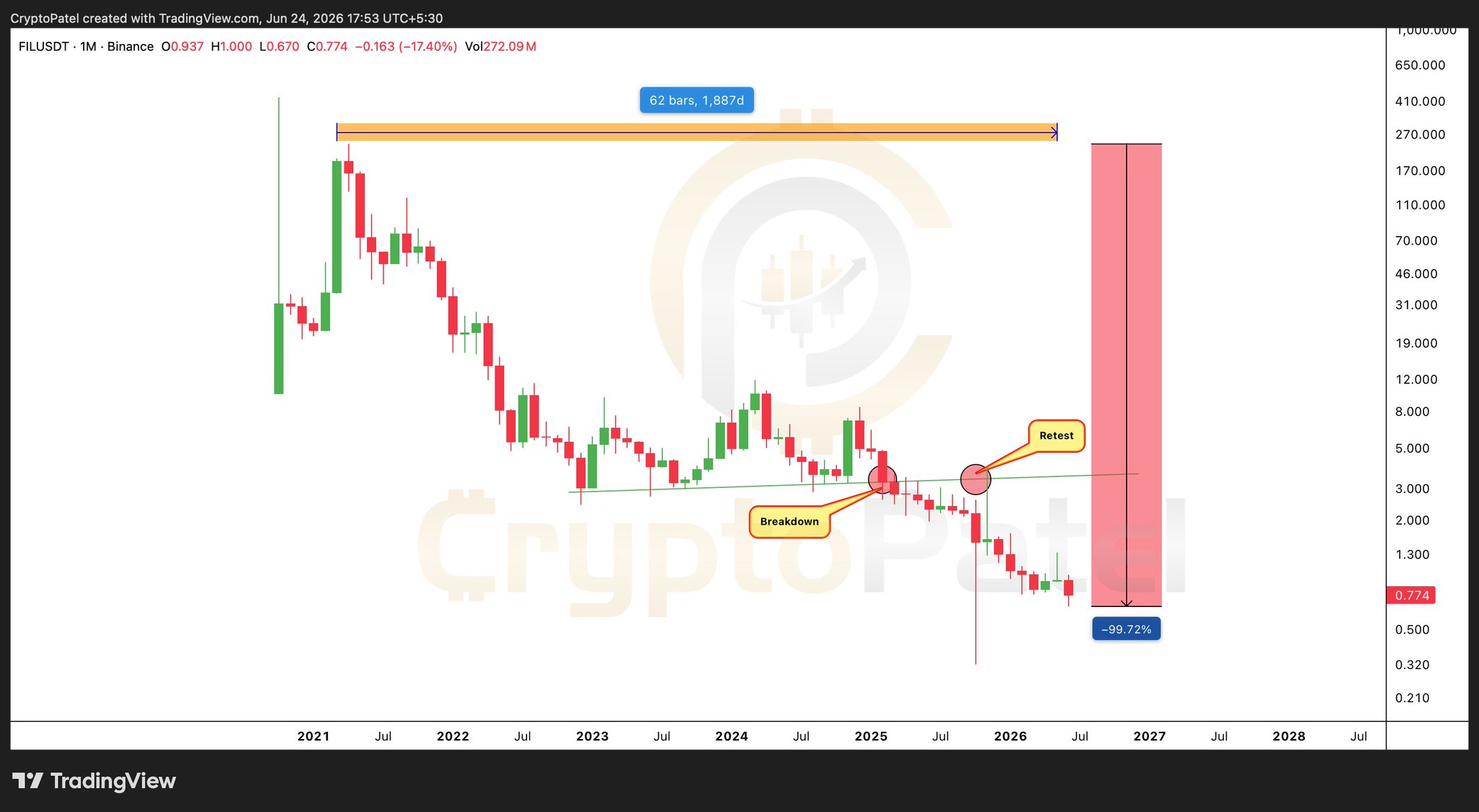 223 15 6.53K أصلي >اتجاه FIL بعد الإصدارهابط بشدةFIL has tumbled 99.72% from its ATH, warning of the risks of buying at high levels and a prolonged bear market.
  🐺 FREKI ANCIENT CRYPTO OG 2011 | HBAR XRP BTC FLR Influencer Media B10.75K @Freki_OG
 👑 𝕂𝕚𝕟𝕘 𝕂𝕒𝕣𝕒𝕟 👑 D53.06K @KingKaranCrypto
Who is ready for the FIP.16 effect after July?! 😤☀️
106 5 4.77K أصلي >اتجاه FIL بعد الإصدارصاعدFIL July FIP‑16 upgrade is imminent, expecting network speedup bullish